Introduction
You found a collections account on your credit report. Your first instinct: pay it immediately. Stop. Before you enter payment information online, you need to know three critical things: (1) verify the account is actually yours and accurate, (2) understand whether paying online helps or hurts your negotiating position, and (3) know which payment method protects you legally. This guide walks you through how to pay debt in collections online without making expensive mistakes that cost you hundreds in unnecessary payments.
The landscape of online collections debt payments has changed dramatically. You have options now—multiple platforms, negotiation windows, and payment verification methods that didn’t exist five years ago. But having options creates a new problem: making the wrong choice. This article maps out exactly when to pay, how to pay, and what to watch for.
The Pre-Payment Investigation (Before You Spend A Dollar)
Most people skip this step. They see a collections account, panic, and pay. You’re going to be smarter.
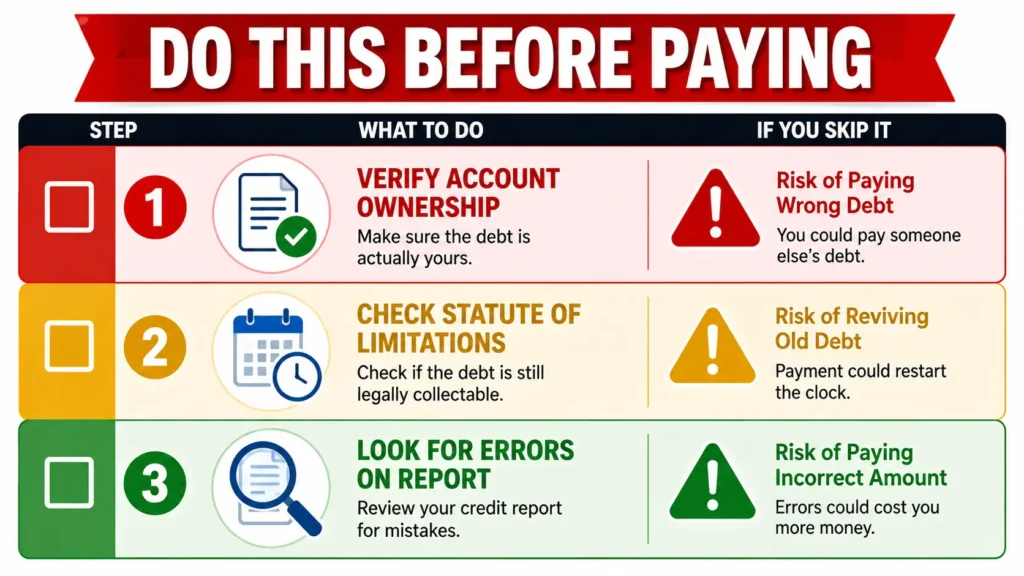
Verify the Account is Actually Yours
Collections accounts don’t always belong to you. Identity theft, name confusion, or creditor errors happen constantly. Before learning how to pay debt in collections online, you need absolute confirmation this debt is legitimate.
Pull your credit report immediately. Go to AnnualCreditReport.com (the official source, free). Look at the account in question and note:
The original creditor name (e.g., “Chase Credit Card” or “Medical Debt – St. Luke’s Hospital”). Collection agencies buy old debt and resell it, so the original creditor tells you whether this is your responsibility.
The account opening date. If you never opened an account with that creditor, it’s not yours. Same if the date predates your relationship with them.
The reported balance. Note the exact number. Collection agencies add fees constantly, and the balance online might be $2,000 while the original debt was $1,200.
Send a debt verification letter if the account isn’t immediately recognizable. You have 30 days to request the collection agency verify the debt is yours. Most won’t respond properly, which gives you legal grounds to challenge it. This is your leverage before you commit to how to pay debt in collections online.
Check for Statute of Limitations
Collection accounts expire. Every state has a statute of limitations (typically 3-6 years) after which a creditor can’t legally sue you for the debt. They can still call you and collect, but they can’t win in court.
This matters critically: If the account is past the statute of limitations in your state, paying online could restart the clock. You don’t want to reactivate an expired debt legally.
Look up your state’s statute of limitations. Search “statute of limitations [your state] collection accounts.” Note the date. If your account was opened more than that time ago (and you’ve made no payments since then), you’re likely in the clear from lawsuits. Paying now removes that protection.
Look for Errors on the Report
Collections accounts have errors constantly. Wrong balance, wrong account status, duplicate listings, accounts that aren’t yours. Before paying, scan for obvious mistakes:
Is the balance current or outdated? Agencies add fees, but they should be documented. A $2,000 debt shouldn’t suddenly be $5,000 without explanation.
Is the account listed multiple times? Sometimes the same collection appears twice under different agency names. You’d be paying twice.
Is there a “Paid” status showing alongside “Active”? This is contradictory and indicates an error.
Finding errors before payment means you can dispute them instead of paying. That’s the better path.Our complete guide on how to dispute credit report errors walks you through the entire 30-day process with templates and verification steps.
The Decision Tree: When to Pay vs. When to Negotiate
This is where most people make expensive mistakes. You don’t always want to pay collections debt immediately, even if you have the money. Timing matters enormously.
When to Pay Online (The Cases Where It Makes Sense)
Scenario 1: Recent Collections Account (Less Than 2 Years Old)
If the account is fresh and you can pay the full balance in one lump sum, paying online often makes sense. You stop the bleeding, prevent further damage, and close the account. Negotiation might save 20-30%, but paying now stops the continuous interest accumulation and credit damage.
However—and this is critical—verify the balance first. Don’t assume what the collection agency is claiming is accurate. Get written confirmation of the exact amount owed before paying.
Scenario 2: You’re Pursuing a Major Financial Goal (Mortgage, Business Loan)
If you’re applying for a mortgage in 30-60 days and a collections account will be evaluated by underwriters, paying it online now removes it from active status. It stays on your credit report for 7 years, but “paid collections” looks far better than “unpaid collections” to lenders.
Scenario 3: Legitimacy is Confirmed, Balance is Accurate
If you’ve verified the account is definitely yours, the balance is correct, and statute of limitations isn’t an issue, you’re safe to pay. Prioritize full payment over partial payment if possible—this closes the account faster.
When NOT to Pay Online (Negotiate First)
Scenario 1: Account is Past Statute of Limitations
Don’t touch it online. Paying restarts the clock. Negotiate or ignore instead.
Scenario 2: Account is 3+ Years Old
Collection agencies know they’ll never collect the full amount from accounts this old. They’d rather settle for 40-50% than keep chasing you. Paying 100% online is financially stupid when negotiation might reduce it to 50%.
Scenario 3: Balance Seems Inflated or Contains Unexplained Fees
Before paying online, contact the agency and request a breakdown of the original debt vs. added fees. Many agencies inflate balances with interest, penalties, and collection costs. Get them in writing explaining every dollar. If they can’t justify it, dispute or negotiate.
Scenario 4: You’re Drowning in Multiple Collections Accounts
If you have 3+ collections accounts and limited cash, you need a collections account strategy. Paying one random collection online doesn’t improve your situation as much as strategically targeting the most damaging ones. Our guide on how to pay off debt fast with low income breaks down exactly where collections fit in your priority hierarchy—they’re Tier 1 (attack first), which tells you they deserve focused attention.
How to Pay Debt in Collections Online: Platform Options & Safety
Once you’ve decided paying online is the right move, you need to know where and how to do it safely.
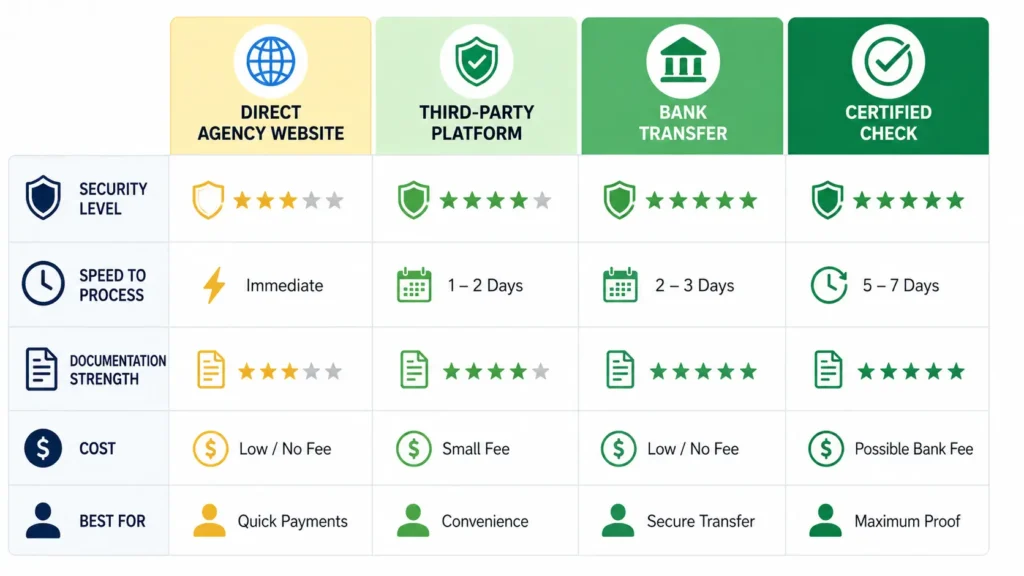
Direct Payment to Collection Agency Website
Most major collection agencies offer online payment through their website. Examples: Midland Credit Management, Portfolio Recovery Associates, Cavalry Portfolio Services.
Process: Find the agency’s website, log in (or create an account), verify the account details, and pay via debit card, credit card, or bank transfer.
Pros: Direct payment means less middleman risk. You’re dealing with the source.
Cons: You’re on their platform, which sometimes has clunky security. Verify the website URL is correct before entering payment info (scammers create fake agency websites).
Safety tip: Never click links from emails or texts. Go directly to the agency’s website by searching their name. Call their main number and ask for the payment portal URL before visiting it.
Third-Party Payment Platforms
Services like LendingClub Settlement, CashNetUSA, or even PayPal allow collection payments. You enter the agency information, and the platform processes payment on your behalf.
Pros: Added security layer. You’re not handing payment info directly to the collection agency. Built-in documentation.
Cons: Extra fee (usually 1-3%). Takes longer (3-5 days vs. immediate).
When to use: If you’re concerned about security or need a paper trail for negotiation purposes.
Bank Transfer or Certified Check
The most secure method: pay via bank transfer or certified check directly to the collection agency’s bank account.
Pros: Complete documentation. Bank statement proves payment. No online hacking risk. Certified check adds legal weight if disputes arise later.
Cons: Slower (5-10 days). Requires getting agency’s banking information in writing first.
When to use: For large payments ($5,000+) where you need ironclad proof. Worth the extra security.
The Negotiation Window (Before You Press “Pay”)
Here’s the hack most people don’t know: you have maximum negotiation leverage before you pay. Once money hits their account, leverage disappears.
The Settlement Offer Call
Before paying online, call the collection agency and propose a settlement. This is straightforward:
“I have a collections account with you for $2,000. I’m willing to pay $1,000 in full settlement if you’ll remove it from my credit report and provide written confirmation.”
Collection agencies hear this constantly. Your approval odds: 40-60% if the account is older (2+ years) or if you frame it as taking action today.
Critical: Get any settlement agreement in writing BEFORE paying. Don’t trust verbal agreements. They’ll say “yes” on the phone, you pay, then deny the agreement existed.
Process:
- Call the agency
- Propose settlement
- If they agree, ask for written confirmation via email
- Only then pay online
If they refuse settlement, you can pay full amount or walk away knowing you negotiated. At least you tried.
Timing the Negotiation
Agencies are more motivated to settle when you’re ready to pay today. “I have the money right now, but I need a settlement to make it happen” is powerful language. They know you might otherwise ignore the debt.
Call on a weekday morning (9 AM – 2 PM EST). Collections call centers are busiest early morning, but settlement officers typically work mid-morning. Avoid Mondays (busiest) and Fridays (slower).
How to Pay Debt in Collections Online Safely: Documentation & Verification
Even after paying, your job isn’t done. You need proof.
Screenshot Everything
After online payment, screenshot:
- The payment confirmation page (with transaction ID, amount, date)
- Your bank statement showing the charge
- Any email confirmations the agency sends
Save these to a folder labeled “Collections Payment [Agency Name] [Date].”
Why? Agencies sometimes “lose” payments or claim they weren’t received. Your documentation proves otherwise.
Request Written Confirmation
After paying online, email the collection agency requesting written confirmation:
“On [Date], I submitted payment of $[Amount] to your agency via [payment method]. Please confirm receipt of this payment and provide documentation of the transaction. Additionally, please confirm the current status of account [Account Number].”
Most agencies respond within 5 business days. If they don’t, follow up via certified mail.
Wait for Credit Report Update
After paying collections debt online, it takes 30-45 days for the account status to update on your credit report. Check your report after 45 days to verify:
The account now shows “Paid” status (not “Active” or “Unpaid”)
The account balance is zero
If you negotiated settlement, it should show “Settled” rather than “Paid”
If it hasn’t updated after 45 days, contact the agency in writing requesting they update the bureaus immediately.
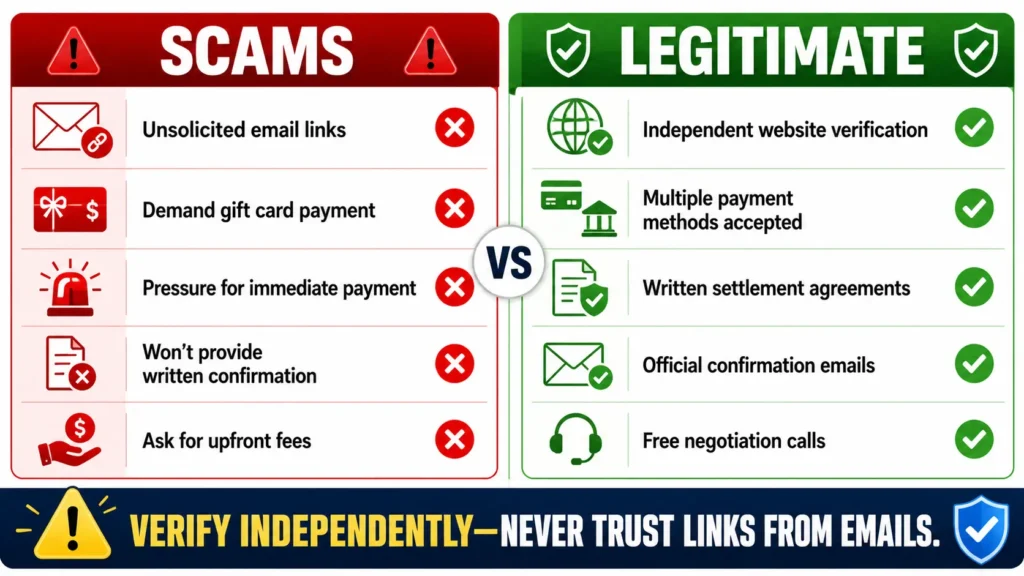
Scams to Avoid When Paying Collections Debt Online
Before you enter payment information, know what predators look for.
Fake Collection Agency Websites
Scammers create websites that look identical to real agencies, collect payment, and disappear.
How to verify: Call the collection agency directly using a number from your credit report or a recent letter. Ask them to confirm their website URL. Never use a URL from an unsolicited email or text.
“Pay Up Front, Settlement After” Scams
A “debt relief” company approaches you: “Pay us $500 upfront and we’ll negotiate your collection down from $2,000 to $1,000.”
They take the $500, disappear, and your debt remains untouched.
Red flag: Legitimate debt settlement or credit counseling is free or low-cost. Any company asking for upfront payment before negotiating is likely a scam.
Verification vs. Payment Confusion
A scammer calls claiming to be from the collection agency: “We need to verify your identity. Provide your credit card information.”
Legitimate agencies verify via security questions or account information. They never ask for full card details over the phone. If you’re still unsure whether you’re dealing with a legitimate agency or a predatory operation, our article on how to spot legitimate creditors vs. scams breaks down the red flags and trust signals that separate real companies from predators. E-E-A-T matters here—we explain exactly what makes an agency trustworthy.
“Pay in Gift Cards” Demands
If an agency asks you to pay collections debt online via gift cards (Google Play, iTunes, Amazon), it’s 100% a scam. No legitimate creditor accepts payment this way.
After Payment: What Happens Next
Paying online doesn’t automatically fix your credit or end the story. Here’s what actually occurs. If the agency continues contacting you after payment, consult CFPB guidance on Fair Debt Collection Practices Act violations.
Credit Report Status Change (30-45 Days)
The account moves from “Unpaid Collections” to “Paid Collections” (or “Settled Collections” if you negotiated). This helps your score, but it stays on your report for 7 years.
Score impact: You’ll see a 20-50 point improvement immediately. As the account ages, the impact weakens. But this is just ONE piece of the puzzle. Paying collections is Step 1. If you’re serious about improving your credit score significantly, check our complete 6-month strategy that shows how paying collections, reducing utilization, and building payment history compounds into major score gains (50-200+ points). Know what’s coming so you can plan accordingly.
Negotiation Verification
If you settled for less than full payment, the agency should report “Settled for Less Than Owed” to the bureaus. This notation actually helps your credit score more than “Paid in Full” because it shows you negotiated.
Verify this appears on your report after 45 days.
Future Contact from the Agency
Even after paying, collection agencies sometimes continue contacting you (illegally, but they do it anyway). Document every call or email. If they violate the Fair Debt Collection Practices Act, you have grounds for a lawsuit.
Keep your payment documentation, confirmation emails, and records of any post-payment contact.
Comparing Payment Outcomes: Full Payment vs. Settlement
Understanding the trade-off helps you decide what’s right:
| Amount paid | 100% of claimed balance | 40-60% of balance |
| Credit report shows | “Paid in Full” | “Settled for Less Than Owed” |
| Credit score impact | +20-40 points | +25-50 points (actually higher) |
| Account closure speed | Immediate | Slightly slower (verification time) |
| Total cost | Highest | Lowest |
| Negotiation effort | Minimal | Moderate |
| Best for | Accounts close to 7-year removal | Accounts with inflated balances |
The insight: Negotiating settlement for 50% sometimes improves your score more than paying full amount due to the “settled” notation. It also saves you thousands in unnecessary payments.
Disclaimer: This article is educational content about collections debt management and online payment options. It is not legal or financial advice. Collection practices, payment policies, and credit reporting procedures vary by agency, state law, and individual circumstances. Before paying collections debt online, consult a licensed attorney or credit counselor, especially if the account is past statute of limitations or you have legal concerns. Information reflects 2026 industry standards but may change. Always verify official agency information directly, not through third-party sources.
Conclusion
Paying debt in collections online isn’t just about entering payment information. It’s about verification, timing, negotiation, and documentation. The people who get the best outcomes don’t rush to pay. They verify the account is theirs, negotiate before paying, use secure platforms, and document everything.
The difference between paying smart ($1,000 settlement) and paying emotional ($2,000 full amount) is literally $1,000. That’s not money wasted—that’s money you could use to attack other debts or build an emergency fund.
Your next step: verify your collections account is actually yours using AnnualCreditReport.com. If it is, make one negotiation call before paying anything. Worst case: they say no and you pay the full amount. Best case: you save hundreds and improve your credit more efficiently.
Want to understand the bigger picture of collection accounts and how they fit into your overall debt strategy? Check out our complete guide on how to pay off debt fast with low income, which shows exactly where collections fit in your priority system, or explore negotiating with debt collectors for detailed settlement scripts that actually work.
Your collections account doesn’t have to cost you thousands. You just needed to know the right sequence.
FAQ SECTION
Q1: Is it safe to pay collections debt online?
Yes, paying a collections debt online is safe if you take proper precautions. Verify the collection agency is legitimate by looking up their contact information independently—never use links from unsolicited emails or texts. Use secure payment methods like bank transfers or certified checks, avoid gift cards, and screenshot all confirmation information. Most major agencies offer secure online payment portals. The real risk isn’t the payment platform; it’s fake websites and scams pretending to be legitimate collection agencies.
Q2: Should I pay my collections account or negotiate a settlement first?
The answer depends entirely on your account age and balance. For recent collections accounts (less than 2 years old), paying can make sense if you have the cash and the balance is accurate. For older accounts (3+ years), the agency knows they’ll likely never collect the full amount, making them highly motivated to settle for 40-60% of the balance. Before paying collections debt online, always attempt negotiation if the account is aged or the balance seems inflated. You can save hundreds with a single phone call.
Q3: Does paying a collections debt online improve my credit score right away?
Partially yes, partially no. Your score improves once the account status changes from “Unpaid” to “Paid Collections” (which takes 30-45 days). However, the full improvement takes months or years as the account’s negative weight gradually weakens. The account itself stays on your credit report for 7 years from the original delinquency date, but its impact decreases significantly after 2-3 years of being paid/settled.
Q4: What payment method is safest when paying collections debt online?
The safest methods, in order: (1) Bank transfer using the agency’s verified banking information, (2) Certified check, (3) Third-party verified platforms like credit card processors, (4) Direct payment through the agency’s official website (verify URL independently). Never pay via wire transfer, gift cards, or any untraceable method. Always get written confirmation of payment and the settlement terms before sending money.
Q5: What happens if the collection agency doesn’t update my credit report after I pay?
After paying collections debt online, it typically takes 30-45 days for the account status to update. If it hasn’t changed after 45 days, send a formal written request (certified mail) to the agency demanding they report the payment to the three credit bureaus within 30 days. If they still don’t comply, file a complaint with the Consumer Financial Protection Bureau—agencies take CFPB complaints seriously and investigate.
Q6: Should I negotiate a settlement or just pay collections debt online in full?
Settlement negotiation is almost always worth attempting, especially for older accounts. Paying full amount online costs more money and helps your score less than settling for 50% while getting a “settled” notation. The settled account notation actually improves your score more than “paid in full” because it demonstrates negotiation. For accounts under 2 years old, paying full amount makes sense if the balance is accurate and you want immediate closure.

Financial enthusiast with 5 years of experience in the US market trends and personal wealth management