
The claim that the IRS will distribute $3000 tax refunds in June 2026 is spreading fast — but the full picture is more complicated than the headlines suggest. No IRS program sends a flat $3,000 check to Americans in June. What is true: some taxpayers are still receiving refunds in June 2026, and the average 2026 refund has climbed to $3,462, per IRS data through April 3, 2026.
Here’s what’s actually driving the June refunds, who’s still waiting, and what the Working Families Tax Cut changed.

What the $3,000 June Claim Actually Means
The story about the IRS distributing $3,000 tax refunds in June 2026 started circulating based on real but misread data. IRS has not announced any program to send targeted $3,000 payments in June. The IRS publicly warned in 2026 about social-media-driven refund claims that encourage inaccurate filings—and filing incorrectly based on viral claims can trigger audits, penalties, and fraud charges.
What is real: some taxpayers are legitimately receiving refunds in June because of specific circumstances, not a new IRS program. The dollar figures circulating — often around $3,000 — reflect the season-wide average refund, not a special targeted payment.
Why Some Taxpayers Are Getting Refunds in June 2026
Three verified reasons explain why the IRS to distribute $3000 tax refunds in June 2026 story has real people behind it:
1. Disaster-area extension filers: Several states received IRS filing deadline extensions due to federally declared disasters in early 2026, including Alaska (extended to May 1), Montana, Washington, Mississippi, Hawaii, and Georgia. Taxpayers in those areas who filed near their extended deadline are receiving refunds weeks later than the standard spring window — placing them in June.
2. Banking information holds: Over 1.4 million taxpayers had refunds held by the IRS due to missing or incorrect direct deposit information, according to a March 2026 letter from House Ways and Means members. Paper checks sent to those filers face 10+ week delays, pushing many deliveries into June or later.
3. Paper returns and amended returns: Paper returns have always taken 4–6 weeks minimum. Amended returns take 12–20 weeks. Taxpayers who mailed in their return or filed an amendment in February or March 2026 are receiving refunds in June on a completely normal schedule.
None of these are new programs. They are ordinary processing timelines playing out later than the standard e-file window.
The Real 2026 Refund Numbers
The IRS to distribute $3000 tax refunds in June 2026 claim draws on a genuine data point: refunds are up significantly this year.
As of April 3, 2026 (IRS filing season statistics):
- Average refund: $3,462 — up 11.1% from $3,116 at the same point in 2025
- Total refunds issued: $241.7 billion — up from $211.1 billion the prior year
- Approximately 90 million refunds processed through April
The $3,000 figure in circulation is slightly below the actual average. Most filers hitting that number combine modest payroll withholding with refundable credits like the Additional Child Tax Credit ($1,700 per child for tax year 2025) or the Earned Income Tax Credit (up to $8,046 for families with three or more children).
Working Families Tax Cut 2026
The Working Families Tax Cut 2026 is the popular name for provisions in the One Big Beautiful Bill, signed into law in 2025. The IRS maintains a dedicated page at irs.gov/newsroom/working-families-tax-cuts. These are real provisions — not viral claims — that affect tax year 2025 returns filed in 2026 and tax year 2026 returns filed in 2027.
New deductions that reduce taxable income (2025–2028):
| Provision | Maximum Deduction | Income Phase-Out |
| No Tax on Tips | $25,000/year | $150,000 single / $300,000 joint |
| No Tax on Overtime | $12,500 single / $25,000 joint | $150,000 single / $300,000 joint |
| Senior Deduction (age 65+) | $6,000 per person | $75,000 AGI / $150,000 joint |
| Car Loan Interest | $10,000/year (US-assembled vehicles) | $100,000 / $200,000 joint |

Child-related changes:
- Child Tax Credit raised to $2,200 per qualifying child (from $2,000)
- Child and Dependent Care Credit rate increases to 50% (from 35%) of qualifying expenses starting 2026
- Trump Accounts: One-time $1,000 federal contribution per eligible child; parents can contribute up to $5,000/year; accounts couldn’t be funded before July 4, 2026
Standard deductions for tax year 2026 (filed in 2027):
- Single: $16,100
- Married filing jointly: $32,200
- Head of household: $24,150
These provisions can meaningfully increase a Trump tax refund in 2026 for qualifying workers — particularly those who earn tips, work overtime, or are 65 or older. But they don’t arrive as a separate June check. They show up as a larger refund when you file.
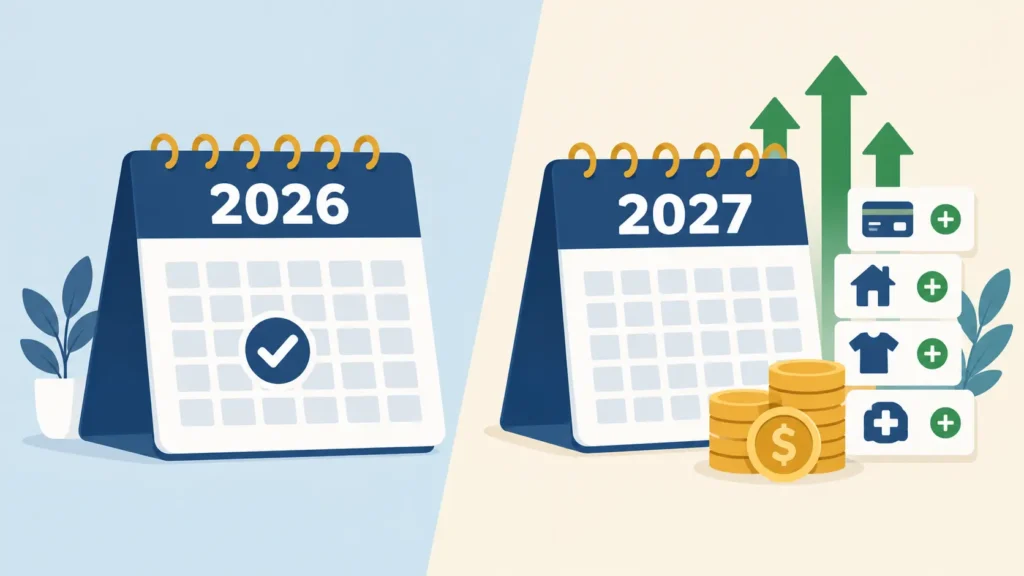
New Tax Laws for 2027 Filing Season
The IRS tax refunds 2026 season introduced changes that carry forward. For returns filed in 2027 (covering 2026 income), the new tax laws for the 2027 filing season include:
- Higher standard deduction ($16,100 single / $32,200 MFJ) reduces taxable income further
- Child and Dependent Care Credit rate rises to 50% — larger credit for working parents
- Charitable deduction for non-itemizes: Up to $1,000 (single) or $2,000 (joint) in cash gifts now deductible
- Trump Accounts: First year eligible for parent contributions; $1,000 federal deposit per qualifying child
- Clean energy credits fully expired: No residential energy credits for 2026 expenditures
- Gambling loss deduction capped: Only 90% of losses deductible starting 2026
One provision that could reduce refunds: Starting 2026, all excess Advance Premium Tax Credit (from ACA marketplace plans) may need to be fully repaid — the repayment cap that protected lower-income enrolls has been removed.
How to Check If You’re Still Waiting
If you haven’t received your refund and you’re searching for why the IRS to distribute $3000 tax refunds in June 2026 applies to you, the answer is almost always one of three things: you filed a paper return, you have a direct deposit error on file, or your state qualifies under a disaster-area extension.
Check your status at IRS.gov/refunds using the “Where’s My Refund” tool. You need your SSN, filing status, and exact refund amount. The tool updates once daily and shows one of three stages: Return Received, Refund Approved, or Refund Sent.
Do not call the IRS if the online tool is working — the IRS answered only 21% of 48.1 million incoming calls in 2026, with average hold times of 14 minutes (National Taxpayer Advocate 2026 mid-year report).
Disclaimer: This article is for informational purposes only. It does not constitute tax or financial advice. Consult a licensed CPA or tax professional for guidance on your specific situation.
Conclusion
The IRS to distribute $3000 tax refunds in June 2026 isn’t a program — it’s a real average refund figure attached to a misleading headline. Taxpayers still waiting in June 2026 fall into clear, verifiable categories: disaster-extension states, banking information problems, or paper return timelines. Meanwhile, the Working Families Tax Cut 2026 is real and worth understanding — tips, overtime, and senior deductions could meaningfully change what you owe or receive when you file next year.
Next: Read our guide on the $3000 IRS tax refund schedule 2026 to see exact deposit dates, EITC timelines, and what changed under the new tax law.
FAQs Section
Q1. Is the IRS to distribute $3000 tax refunds in June 2026 a real program?
No. No IRS program sends targeted $3,000 payments in June 2026. The claim misreads the season-wide average refund of $3,462. Some taxpayers receive refunds in June because of disaster-area extensions, banking information holds, or paper return timelines—not a new distribution program.
Q2. Why are some people getting their IRS tax refunds 2026 in June?
Three groups receive June refunds: taxpayers in disaster-declared states with extended deadlines (Alaska, Montana, Washington, etc.), those whose direct deposit info was incorrect and who are getting paper checks, and paper return or amended return filers on a standard 8–12 week processing timeline.
Q3. What is the Working Families Tax Cut 2026?
The IRS calls the Working Families Tax Cut 2026 the label for key provisions of the One Big Beautiful Bill. It includes deductions for tips (up to $25,000), overtime pay (up to $12,500 for single), a $6,000 senior deduction, and a $10,000 car loan interest deduction. These reduce taxable income and can increase your refund when you file.
Q4. What is the average Trump tax refund 2026?
The average 2026 refund was $3,462 as of April 3, 2026 — up 11.1% from 2025. New deductions from the One Big Beautiful Bill, including no tax on tips and the expanded Child Tax Credit ($2,200 per child), contributed to the increase for qualifying filers.
Q5. What are the new tax laws for 2027 filing season?
For 2026 income filed in 2027: standard deductions rise to $16,100 (single) and $32,200 (joint), the Child and Dependent Care Credit rate rises to 50%, non-itemizes can deduct up to $1,000 in charitable cash gifts, and clean energy credits expire fully. Trump Accounts become fund able for the first time.
Q6. How do I check my IRS refund status in June 2026?
Use the “Where’s My Refund” tool at IRS.gov/refunds. Enter your SSN, filing status, and exact refund amount. The tool updates once daily. If it shows “Refund Sent” but you haven’t received it, contact your bank — most delays at that stage are on the receiving end, not the IRS.

Financial enthusiast with 5 years of experience in the US market trends and personal wealth management