Introduction
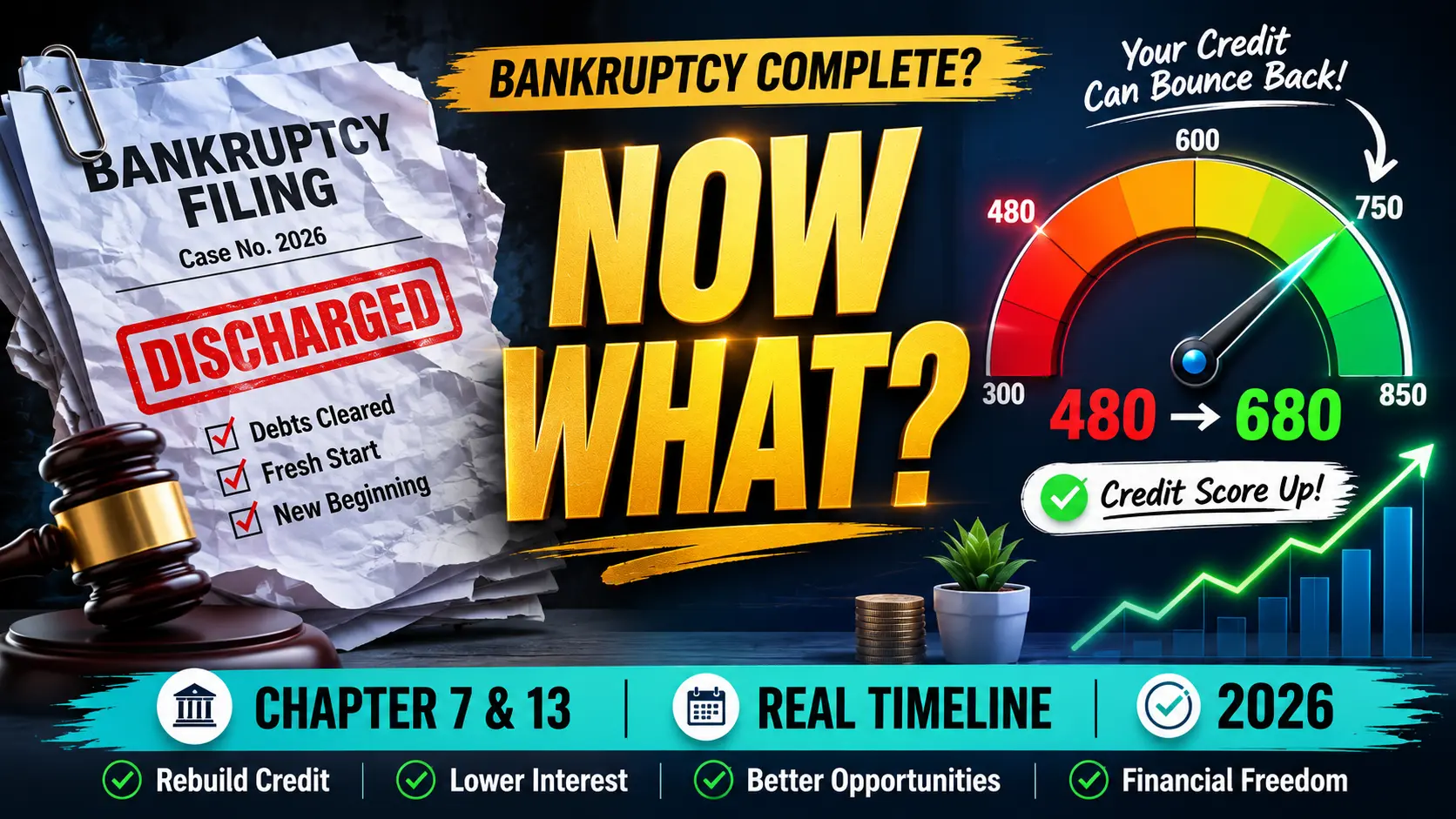
To improve your credit score after bankruptcy, start with three actions the month your discharge is final: pull all three credit reports and dispute any errors, open one secured credit card, and set up autopay on every remaining account. Most people who follow these steps consistently see their score move from the 500s to the mid-600s within 12 to 24 months — well before the bankruptcy itself falls off their report.
This is not a guide full of empty encouragement. It is a practical, step-by-step roadmap built on what actually moves the needle after bankruptcy — with honest numbers, realistic timelines, and no promises that cannot be kept.
Disclaimer: This article is for informational and educational purposes only. It does not constitute personalized financial, legal, or credit advice. Please consult a licensed financial advisor, credit counselor, or bankruptcy attorney before making decisions based on this content.
What Happens to Your Credit Score After Bankruptcy?
Let us start with the honest answer, because most people searching this topic deserve clarity — not comfort.
Filing for bankruptcy causes a significant drop in your credit score. How much depends on where you were starting from. If your score was already in the 500s from months of missed payments and collections, the drop is smaller — sometimes only 50 to 80 points — because the damage was already priced in. If you had a 700+ score before filing, you can expect a larger drop, sometimes 150 to 200 points or more.
After discharge, your score typically lands somewhere between 480 and 550. That is the floor. From that point forward, every responsible financial decision you make starts pushing it back up.
Here is what most people do not realize: the bankruptcy filing stops the active bleeding. Before you filed, every missed payment, every collection, every charge-off was dragging your score lower every single month. The discharge ends that. And the moment the active damage stops, recovery can begin.
“To understand the full picture of what drives your score and how to move it fast, read our complete guide on how to improve your credit score in 30 days.”
Chapter 7 vs. Chapter 13 — How Each Affects Your Recovery
These two types of bankruptcy work differently — and they recover differently too.
| What it does | Discharges most unsecured debts | Restructures debt into a 3–5 year repayment plan |
| Time to discharge | 3 to 6 months from filing | 3 to 5 years (you pay throughout) |
| Stays on report | 10 years from filing date | 7 years from filing date |
| Score impact | Larger initial drop | Smaller initial drop — you are still paying |
| Recovery speed | Can begin immediately after discharge | Can begin during the plan with good payment history |
| Mortgage wait | Typically 2 years after discharge (FHA) | Sometimes eligible during plan with trustee approval |
One detail that almost no one mentions: the clocks run from your filing date, not your discharge date. If your Chapter 7 case took four months from filing to discharge, those four months have already counted off the ten-year timeline. This matters more than most people think — especially as you approach the five and seven-year marks when the bankruptcy’s impact on lenders starts shrinking meaningfully.
Individual accounts included in your bankruptcy fall off around seven years from their original delinquency date, which may be earlier than the bankruptcy public record itself. Your report cleans itself in stages — not all at once.
The Real Recovery Timeline — Month by Month
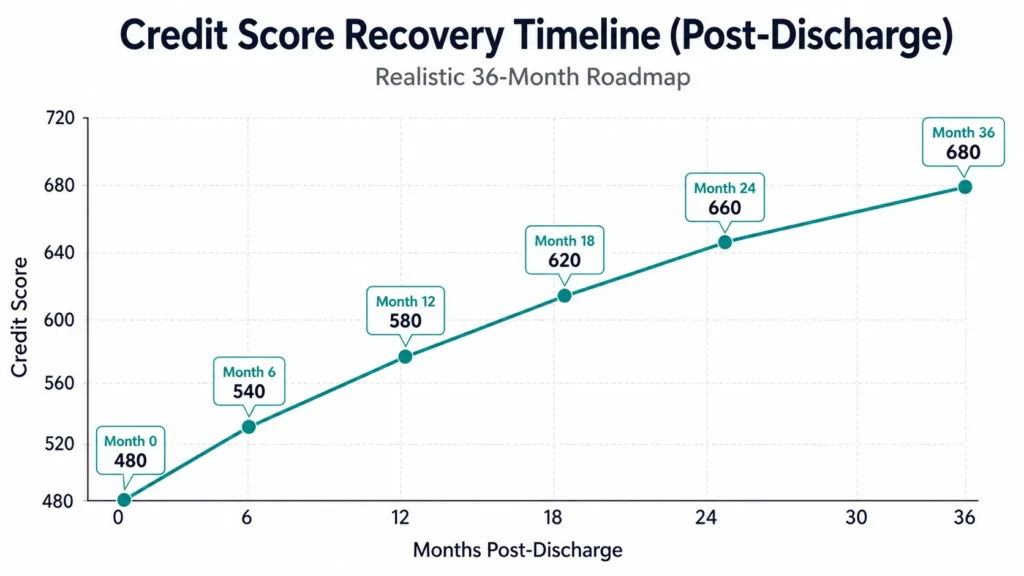
Here is what realistic credit score recovery after bankruptcy actually looks like for someone who is actively working on it:
| At discharge | 480 – 550 | Baseline — active damage has stopped |
| 6 months post-discharge | 520 – 580 | Secured card activity begins reporting |
| 12 months post-discharge | 560 – 620 | Consistent payment history starts compounding |
| 18 months post-discharge | 600 – 650 | Second credit product possible, positive history building |
| 24 months post-discharge | 640 – 680 | Mortgage eligibility may begin (FHA, Chapter 7) |
| 3 years post-discharge | 660 – 720 | Bankruptcy impact fading, conventional credit accessible |
| 5+ years post-discharge | 700+ possible | Strong positive history can significantly offset bankruptcy mark |
These are realistic ranges for active rebuilders — not guarantees. Individual results vary based on starting score, credit mix, and financial behavior.
Two to three years of consistent, deliberate credit use is a realistic target to reach the mid-600s. That is not a life sentence. That is a plan.
Step 1: Fix Your Credit Report First
The very first thing to do after discharge — before applying for any new credit — is pull your credit reports from all three bureaus at AnnualCreditReport.com and go through them line by line.
Here is why this matters so much. When a debt is discharged in bankruptcy, it should appear on your report as “discharged in bankruptcy” with a zero balance. But errors are common. Debts sometimes continue to show as active, delinquent, or owed — even after discharge. That error is actively suppressing your score when it should not be.
Common errors to dispute after bankruptcy:
- Discharged debts still showing a balance owed
- Accounts marked “delinquent” or “charged off” instead of “discharged in bankruptcy”
- Accounts that were included in bankruptcy still being sold to collection agencies
- Incorrect account open dates or balance amounts
File disputes directly with each bureau online. Include your discharge paperwork as supporting documentation. Under the Fair Credit Reporting Act, bureaus have 30 days to investigate and must remove anything they cannot verify. One successful dispute can add 20 to 40 points almost immediately.
“The FTC explains your rights to dispute inaccurate information under the Fair Credit Reporting Act — including errors that appear after bankruptcy discharge.”
Step 2: Open a Secured Credit Card
A secured credit card is the most reliable tool for rebuilding credit after bankruptcy. It works differently from a regular credit card — you deposit your own money upfront (usually $200 to $500), and that deposit becomes your credit limit.
Every month you use the card for a small purchase and pay it off in full, the issuer reports that positive activity to the credit bureaus. Over six to twelve months, this consistent on-time payment history starts rebuilding your score from the ground up.
What to look for in a secured card after bankruptcy:
- No annual fee or a low one (under $35)
- Reports to all three credit bureaus — not just one
- Offers a path to graduate to an unsecured card after 12 months of good behavior
- Does not require a credit check that results in a hard inquiry
Three cards worth researching for post-bankruptcy rebuilding:
| Discover it Secured | $200 minimum | $0 | ✓ Yes |
| Capital One Platinum Secured | $49, $99, or $200 | $0 | ✓ Yes |
| OpenSky Secured Visa | $200 minimum | $35 | ✓ Yes |
Verify current terms directly with each issuer before applying. Card availability and terms change.
One important discipline: use the card for one small recurring purchase — a streaming subscription, a tank of gas — and pay it in full every month before the statement closing date. Do not carry a balance. The goal is to build payment history, not accumulate debt.
Step 3: Consider a Credit-Builder Loan
A credit-builder loan is a product specifically designed for people rebuilding credit. It works almost backwards from a regular loan — you make monthly payments first, and you receive the money at the end.
Here is how it works: you apply for a $500 to $1,500 credit-builder loan at a credit union or community bank. The lender holds the money in a savings account while you make 12 to 24 monthly payments. Those payments are reported to the credit bureaus. When the loan term ends, you receive the funds — and you have 12 to 24 months of positive payment history on your report.
Credit-builder loans typically cost $15 to $30 per month and report to all three bureaus. Combining one with a secured credit card gives you two separate positive tradelines reporting monthly — which accelerates your recovery faster than either alone.
“The CFPB explains exactly how credit-builder loans work and what to look for before applying.”
Step 4: Become an Authorized User
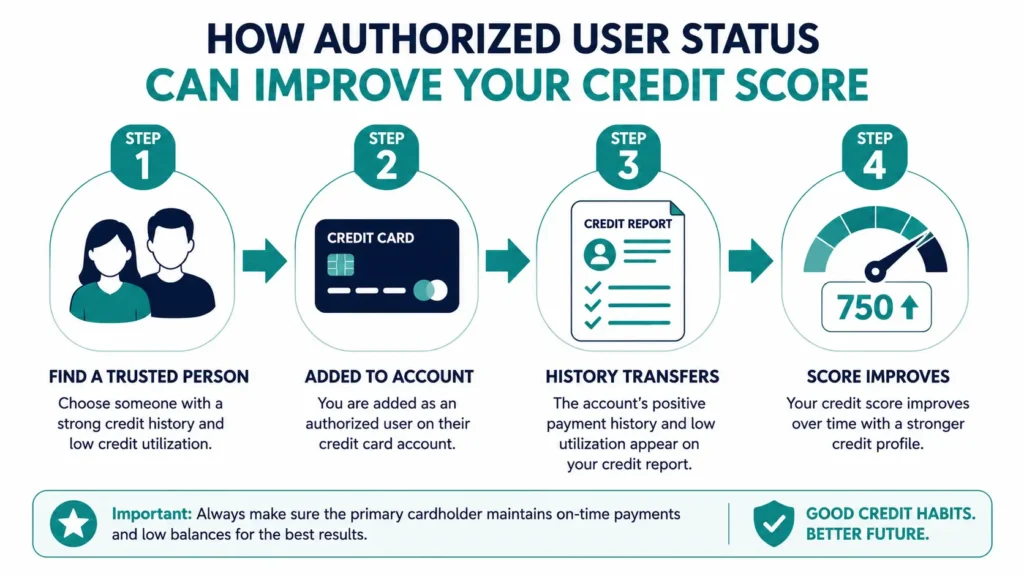
If you have a family member or close friend with a long, clean credit history, asking them to add you as an authorized user on one of their credit cards is one of the fastest ways to add positive history to your file.
You do not need to use the card. You do not even need to hold it physically. Simply being listed as an authorized user causes that account’s entire history — including its length and payment record — to appear on your credit report.
This works best when the primary cardholder has:
- An account open for several years
- A low utilization rate (under 20%)
- A perfect or near-perfect payment history
One honest caution: if the primary cardholder misses a payment or maxes out their card, that negative information will also appear on your report. Only do this with someone whose financial habits you completely trust.
Step 5: Never Miss a Payment Again
Payment history is 35% of your FICO score — the single most important factor. And after bankruptcy, it is the one area where you have zero room for error.
One missed payment in the first two years after bankruptcy can set your recovery back six to twelve months. It signals to lenders and scoring models that the patterns that led to bankruptcy may still be present. It is not a permanent setback, but it is a real one.
Set up autopay for every account — secured card, credit-builder loan, any remaining bills. Set the autopay for the minimum payment at minimum, and pay the full balance manually on top of that when possible. The autopay is your safety net. It prevents an accidental oversight from becoming a scoring disaster.
“Once your score starts recovering, your next milestone might be buying a home. Here is what score you actually need and how to get there — our complete guide on how to improve your credit score to buy a house.”
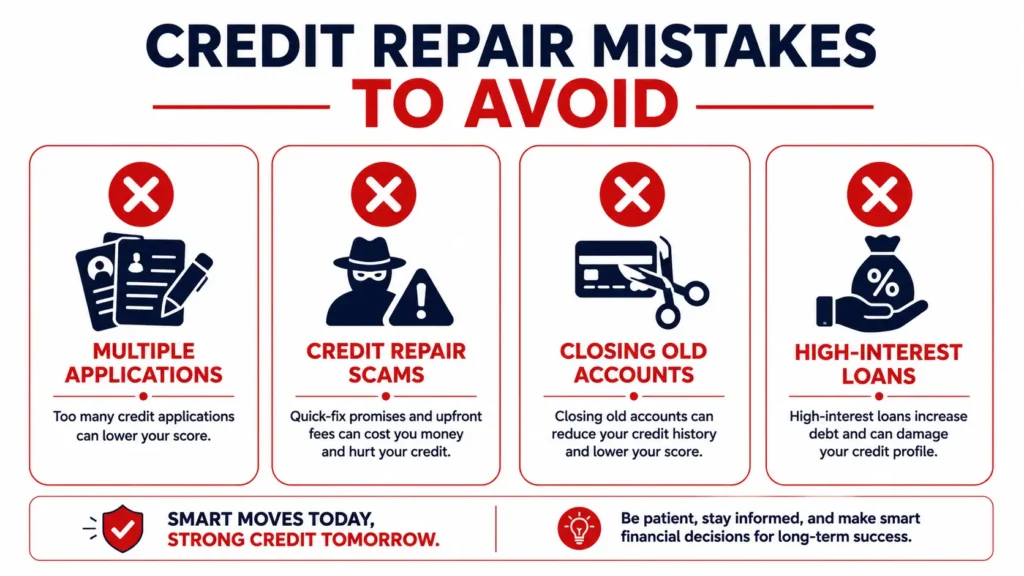
What to Avoid While Improving Your Credit Score After Bankruptcy
The recovery process is as much about what you do not do as what you do.
❌ Do not apply for multiple credit cards at once Every application creates a hard inquiry. Multiple inquiries in a short window signal financial desperation to lenders and scoring models. Apply for one secured card, let six months of positive history build, and only then consider adding a second product.
❌ Do not use credit repair companies There is no legal way to remove accurate bankruptcy information from your report before its time is up. Any company promising otherwise is lying. The FTC has taken enforcement action against dozens of these operations. Save your money and do the work yourself — everything a credit repair company can legally do, you can do for free.
❌ Do not close old accounts that survived bankruptcy If any accounts came through your bankruptcy without being discharged — perhaps a secured loan you reaffirmed — keep them open and keep paying. Closing old accounts reduces your average account age and available credit, both of which hurt your score.
❌ Do not take on high-interest “second-chance” loans Some lenders specifically target people who have recently filed bankruptcy, offering loans at 25% to 35% APR. These are traps. High-interest debt is what tends to create the financial pressure that leads to bankruptcy in the first place. Use secured cards and credit-builder loans instead — both give you the credit history you need without the debt risk.
FAQ — How to Improve Credit Score After Bankruptcy
Q1: How long does it take to improve your credit score after bankruptcy?
Most people who actively rebuild see their score move from the 500s to the mid-600s within 12 to 24 months after discharge. The largest gains typically happen in years two and three as consistent positive history begins to outweigh the bankruptcy’s impact. Reaching 700+ is realistic within four to five years for diligent rebuilders — long before the bankruptcy falls off your report.
Q2: Does bankruptcy permanently ruin your credit score?
No. Chapter 7 stays on your credit report for 10 years from the filing date, and Chapter 13 stays for 7 years. However, the impact on your score decreases significantly over time as positive credit history accumulates. Many people reach scores in the 700s well before the bankruptcy record disappears entirely.
Q3: What is the fastest way to rebuild credit after bankruptcy?
The fastest combination is: dispute any errors on your post-discharge report, open one secured credit card and pay it in full monthly, add a credit-builder loan for a second tradeline, and never miss a payment. These four steps together can move your score 80 to 120 points within 12 to 18 months.
Q4: Can I get a credit card after bankruptcy?
Yes — though your options are limited immediately after discharge. Secured credit cards, which require a cash deposit as collateral, are the most accessible option. Discover, Capital One, and OpenSky all offer secured cards available to people who have recently filed bankruptcy, with no or low annual fees.
Q5: How soon can I buy a house after bankruptcy?
For an FHA loan after Chapter 7, the typical waiting period is two years from the discharge date, with demonstrated credit recovery. Chapter 13 filers may be eligible during the repayment plan with trustee approval and 12 months of clean payment history. Conventional loans typically require a longer waiting period of four years after Chapter 7.
Q6: Will my credit score go up when bankruptcy falls off my report?
Yes — typically. When the bankruptcy public record is removed from your report, your score may increase by 30 to 100 points, depending on what else is on your report at that point. However, the improvement is often less dramatic than people expect, because the score had already been recovering throughout the years of active rebuilding. The best outcomes happen when someone has been consistently building positive history before the bankruptcy drops off.
Conclusion
Improving your credit score after bankruptcy is not a question of whether it is possible. It is a question of how methodically you approach the rebuilding process. Pull your reports. Dispute the errors. Open a secured card. Add a credit-builder loan. Pay everything on time. Repeat for 24 months.
The bankruptcy will be on your report for years. But its grip on your financial life loosens every single month that you build clean, positive history on top of it. Two years from now, your score can look like that of someone who simply had a rough patch — not someone who filed bankruptcy.
The work is real. But it is finite. And it is absolutely worth doing.
Your next step: Now that you have a clear path to rebuild your credit, make sure your broader financial foundation is in place too.
📌 Read Next: [How to Improve Your Credit Score in 30 Days — Complete 2026 Guide ]
📌 Also Read: [How to Build an Emergency Fund Fast — 30-Day Plan ]

Financial enthusiast with 5 years of experience in the US market trends and personal wealth management