
By Ankur Saxena, CA
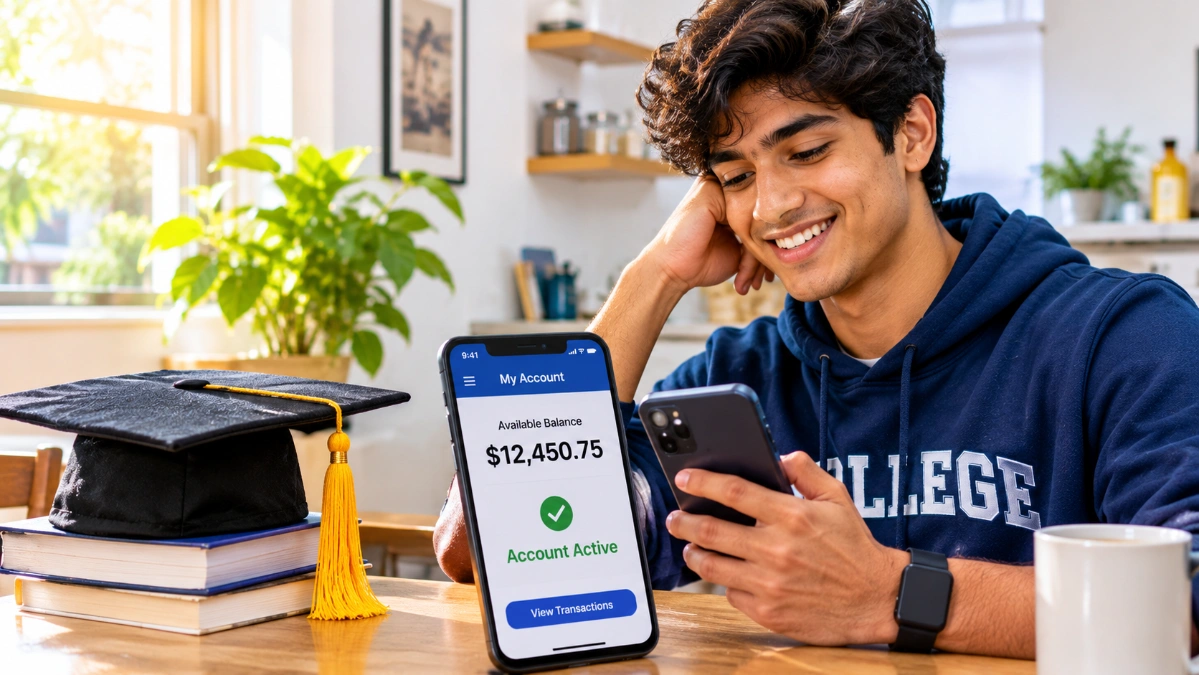
You walk across the stage, toss your cap, and then it hits you: that savings account you’ve had since middle school still has a parent’s name on it. Figuring out how to transfer money from minor savings account to new individual account is one of your first real adult money moves.
I dug through deposit agreements and help pages at the big banks to see where 18-year-olds actually get stuck. The process itself is easy. The fine print is where people get burned, especially since what happens to a high school savings account at 18 depends on how the account was set up.
As a Chartered Accountant, I treat this like a ledger problem: who owns the money, and who can legally move it? Answer those two questions first, and the rest falls into place. It also saves you a lot of back-and-forth at the bank.
How to Transfer Money From Minor Savings Account to New Individual Account
Quick answer: Confirm whether your account is joint or custodial (UTMA/UGMA), open a new individual account in your name, link the two with routing and account numbers, start an ACH transfer or request a cashier’s check, then redirect direct deposits and close the old account once everything settles.
Step 1: Confirm Your Account Type — Joint vs. UTMA/UGMA

Let’s follow a kid I’ll call Tyler. He’s 18, he’s got $6,200 saved from summer jobs and birthday checks, and his savings account is something his mom opened when he was twelve. Before he picks a new bank, he needs to answer one question: whose name is on this account?
Check the account title on a statement or in the app. If it lists Tyler and a parent as co-owners, it’s joint. If it reads something like “Parent, as custodian for Tyler, under the UTMA,” it’s custodial. Same savings balance, wildly different rules, and we’ll cover both below.
Step 2: Open and Verify Your New Individual Account
Next, Tyler opens an individual account in his name only. Most banks ask for a government photo ID, his Social Security number, and a U.S. mailing address. Online banks can approve him in about ten minutes.
Here’s a snag I’d flag. Published bank guides say new accounts often start with lower transfer caps, sometimes around $1,000 a day for the first 30 days. Banks change these rules often, so open the new account a couple of weeks before you need the cash.
Step 3: Link Accounts Using Routing and Account Numbers
Linking sounds scarier than it is. Tyler grabs the routing number and account number from the new bank’s app, then plugs them into the old bank’s “add external account” screen. That’s it. Two numbers connect the accounts.
Then the waiting game starts. Banks usually drop two tiny deposits, often under a dollar each, into the other account, and you confirm the amounts. Expect one to three business days, or skip the wait with instant login-based verification.
Step 4: Initiate the ACH Transfer or Request a Cashier’s Check
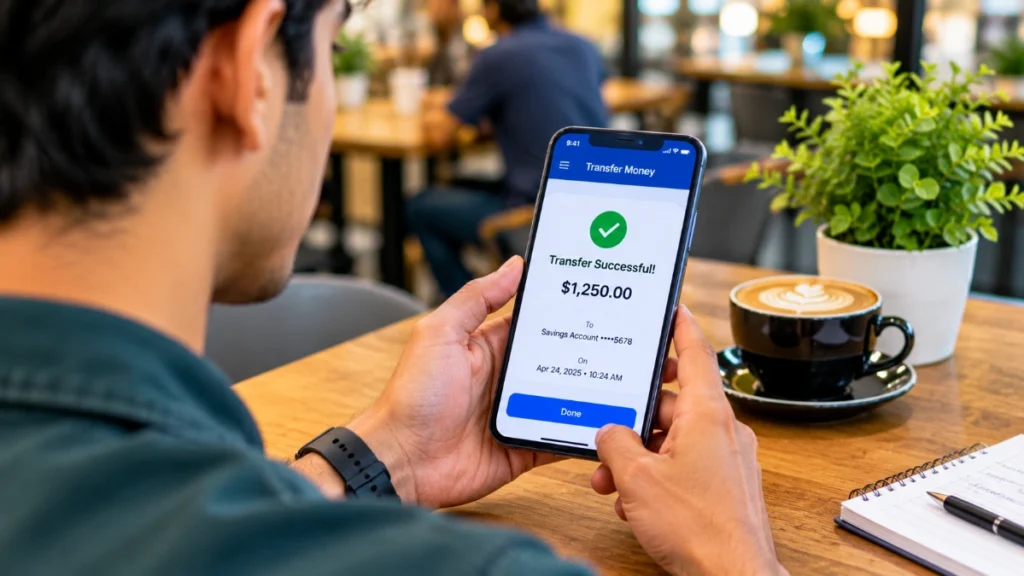
Once the link is verified, Tyler schedules the move. Standard ACH usually lands in one to three business days, and big banks rarely charge for it. The catch is the daily cap, which changes a lot from one bank to the next.
Here’s what I found while comparing the names Tyler would likely run into. Chase sets limits dynamically, and published guides often cite $10,000 to $25,000 a day. Bank of America tends to run tighter, roughly $1,000 to $5,000 for newer customers. Wells Fargo commonly lands around $5,000.
Capital One doesn’t publish one flat number, though $10,000 a day shows up often. Ally gets much more generous once the account has some history, though newer accounts start lower. None of these figures are promises, so check the limit inside your own app before you plan around it.
If the cap is too low, a cashier’s check is your plan B. Tyler walks into a branch with his ID, asks for a check payable to himself, and deposits it at the new bank. It’s slower, but it works.
Step 5: Move Direct Deposits and Close the Old Account
This is where I’d slow way down. Before closing anything, Tyler should give his employer the new routing and account numbers, update Venmo and Cash App, and wait for pending items to clear. A closed account can bounce an incoming paycheck right back to the sender.
Once the old balance hits zero and a full statement cycle passes with no surprises, he can close it. If a parent is on a joint account, ask for written confirmation. That little email can save you a headache if a stray fee or deposit shows up later.
Joint Minor Accounts vs. UTMA/UGMA Custodial Accounts: Key Rules
Start with the easy one. On a joint minor account, an 18-year-old co-owner can typically start an ACH transfer or withdraw funds without a parent’s signature. The flip side: the parent has the same power, so a joint title cuts both ways.
Custodial accounts work differently. The money legally belongs to the minor, but the adult custodian runs the account until the state’s age of termination. Most states use 21 for UTMA accounts, while a few, including California and Nevada, use 18.
Until that birthday, the custodian usually has to sign off on a transfer or hand-over. Tyler can’t just walk in and clean out the account, and a bank can’t legally release it early. Many banks want a signed authorization from the custodian, and some insist on seeing both of you in a branch.
The Consumer Financial Protection Bureau guidelines on youth banking are a solid starting point for how banks treat young account holders. Your bank’s own deposit agreement still has the final say, so skim it before your first visit.
To dodge branch delays, bring a photo ID, a recent statement, and your custodian’s contact info. Call ahead and ask what paperwork a custodial release needs. Showing up unprepared usually means a second trip.
Best Ways to Move Your Savings Without Paying Fees
Money can move four ways, and the price tags differ more than you’d guess. Here’s the side-by-side I put together, using typical figures from published bank fee schedules and guides. Your bank’s numbers may vary, so treat this as a ballpark.

| Transfer Method | Speed | Typical Fee | Best Use Case | Parent Approval Needed? |
|---|---|---|---|---|
| Internal Bank Transfer | Instant to same day | Free | Staying at the same bank and moving money into your new individual account | Joint: NoUTMA/UGMA: Yes, custodian signs off |
| External ACH Transfer | 1–3 business days | Usually $0 | Most savings moves between two banks | Joint: NoUTMA/UGMA: Yes, custodian signs off |
| Cashier’s Check | Same day to get; deposit holds may apply | Free at some banks, small fee at others | Backup when ACH caps or verification delays get in the way | Joint: NoUTMA/UGMA: Yes, custodian signs off |
| Wire Transfer | Same business day if sent before cutoff | About $25–$35 outgoing at big banks | Large, time-sensitive moves | Joint: NoUTMA/UGMA: Yes, custodian signs off |
Wires are the one that stings. Published 2026 fee schedules put outgoing domestic wires around $25 to $35 at the big banks. For a savings transfer that isn’t urgent, ACH does the same job for free, so skip the wire unless you’re up against a deadline.
Watch out for monthly maintenance fees on the old account, too. If it charges a fee below a minimum balance, don’t leave a few bucks behind. Empty it, confirm a zero balance, and close it.
Before you send a dollar, confirm FDIC deposit insurance protection on the new account. Coverage generally runs up to $250,000 per depositor, per bank, per ownership category, and your new individual account falls under the single-account category. A quick look at the bank’s FDIC statement settles it.
Should You Transfer Your Savings or Keep Your Current Bank?
Moving everything sounds like the obvious play, but it isn’t always the best one. Tyler’s old bank might offer a decent rate, fee-free checking, and a branch near campus. Switching only makes sense if the new place gives him something real.
The case for moving is simple. Online banks often pay several times more interest than a traditional big-bank savings account, and a fresh individual account means no parent has any access. That separation matters if you’re building credit and independence at the same time.
The case for staying is just as real. Keeping the account saves you the verification wait, the new-account limits, and the direct-deposit shuffle. In that scenario, you’d remove a parent from a joint bank account at 18 and keep the same account number.
My take as a CA looking at the numbers: weigh the interest you’d gain against the hassle. On $6,200, a one-point rate gap is about $62 a year. That’s real money, but it’s not worth a headache if your current bank treats you well.
4 Costly Mistakes to Avoid When Moving Your Money at 18

- Closing the old account before pending transfers settle. A transfer in flight can fail or bounce back if the source account disappears, and sorting that out can take weeks. Wait until every transfer shows as complete.
- Forgetting to update employer payroll direct deposit. Your paycheck keeps landing in the old account, which may be closed by then. Hand HR the new numbers at least one pay cycle ahead.
- Exceeding daily outbound ACH limits. A $6,000 transfer against a $1,000 cap will stall or get split across days. Check your limit first, and break the move up if you need to.
- Misplacing 1099-INT tax documents. Banks send Form 1099-INT when you earn $10 or more in interest, and the old account’s form can go to an outdated mailing address. Download it from online banking before you close the account.
Moving your savings at 18 comes down to paperwork and patience. Confirm who owns the account, link everything early, and let each step settle before you start the next one. Do that, and the whole thing turns into a non-event.
Frequently Asked Questions
Q1. Can I transfer money out of my minor savings account at 18 without my parents?
If it’s a joint account, usually yes. As a co-owner, you can typically start an ACH transfer or withdraw funds on your own. If it’s a UTMA or UGMA custodial account, the custodian generally has to release the money until your state’s termination age, which is often 21.
Q2. How long does it take to transfer money from a minor savings account to a new account?
Plan on about a week from start to finish. Linking accounts can take one to three business days, and the ACH transfer itself usually adds another one to three. Weekends and holidays don’t count as business days, so start early if you’re on a deadline.
Q3. Is there a limit on how much I can move at once?
Yes. Banks cap outgoing ACH transfers by day, and new accounts often start lower, sometimes around $1,000. Established accounts at big banks may reach $5,000 to $25,000. Check the limit in your app, or call, and split large balances across a few days, since banks change these caps often.
Q4. Do I owe taxes when I move my own savings?
No. Moving your own money between your own accounts isn’t a taxable event. The interest it earned is taxable, though, and banks send Form 1099-INT when you earn $10 or more. I’m a Chartered Accountant, not a U.S. tax preparer, so check with one for your situation.
Q5. Do I need my parents to open a new individual account at 18?
No. At 18, you’re an adult in nearly every state, so you can open an individual checking or savings account yourself with a photo ID and Social Security number. Your parents don’t need to co-sign. A few states set the age of majority at 19 or 21, so confirm yours.
Disclaimer: Bank policies and state laws vary, and this article is for educational purposes only, not legal or financial advice.

Ankur Saxena, CA is a qualified Chartered Accountant (ICAI) and the founder of MyFinanceGoal.com. Drawing on his formal background in financial analysis, accounting, and tax compliance, he breaks down U.S. banking rules, credit systems, and IRS guidelines into practical, step-by-step guides—all cross-verified against official sources like the IRS, FDIC, and CFPB. (Educational content only; CA India, not a U.S. CPA).