

You turned 18. Your name still shares a bank account with your parent. Now you want control, and your parent will not sign.
Here is how to remove parent from joint bank account at 18 without signature. You cannot force a removal, but you can legally build your own solo account.
This guide explains your rights, your options, and each step to protect your money. It offers general education, not legal advice. Rules vary by state and bank.
Can You Remove a Parent From a Joint Account Without Their Signature?
No. Bank account agreements require every joint owner to sign before ownership changes. You can still protect yourself legally and safely. Open a new solo account at a different bank and move only your own money there. Then redirect your paycheck and stop using the joint account.
That workaround stays legal when you move only money that belongs to you. It takes nothing from your parent. It simply puts your income under your sole control.
Joint Bank Account Rules at 18: What Changes Legally
Turning 18 changes your legal status. In most states, you now count as an adult. Alabama and Nebraska set the age at 19, and Mississippi sets it at 21.
Most banks still open adult accounts at 18, but check your bank’s policy. Your banking rights at 18 in the US usually include these:
- Open a checking or savings account in your name alone.
- Sign a bank agreement without a parent.
- Order a debit card and set up online access.
- Direct your own paycheck to any account you choose.
Joint Tenancy With Right of Survivorship
Many parent-child joint accounts use joint tenancy with right of survivorship. Each owner has full access. If one owner dies, the survivor receives the balance automatically.
Equal access does not always mean equal ownership. If your parent deposited most of the money, a court may treat it as theirs.
Custodial Accounts (UGMA/UTMA)
A custodial account works differently. Your parent acts as custodian, but the money legally belongs to you. The gift cannot be taken back.
Control passes to you at the termination age. Most states set it between 18 and 21, and a few allow up to 25. Many banks then retitle the account in your name alone.
This account is not truly joint. You do not need a “removal.” You need the bank to end the custodianship. Bring your photo ID and proof of age.
Want the full account-by-account breakdown? Read our pillar guide: High School Savings Account at 18 Without Parents.
Why Banks Require Two Signatures
Banks follow the account agreement that both owners signed. Removing an owner changes that contract.
Dual authorization protects the bank from lawsuits and fraud claims. It also protects each owner from losing access without notice. Federal identity rules also push banks to verify every owner.
Some people search for “remove co-signer from bank account.” A co-signer and a joint owner differ. A joint owner holds full rights to the money. Banks often use these terms loosely, so ask which role your parent holds.
How to Remove Parent From Joint Bank Account at 18 Without Signature: 3 Options
Pick the path that matches your parent’s willingness to cooperate. Each option below works in a different situation.
Option 1: The Mutual Consent Path (Bank Form Process)
Use this route if your parent cooperates. It often takes just one bank visit.
- Call your bank and ask for the “remove owner” or “retitle account” form.
- Complete the form with your parent. Both of you sign it.
- Visit a branch with your photo ID. Your parent may need to attend too.
- Request written confirmation. Check your next statement for the change.
Pro tip: Many banks let you remove yourself alone. Removing the other owner usually needs both signatures.
Option 2: The Independent Workaround (Solo Account at a Different Bank)
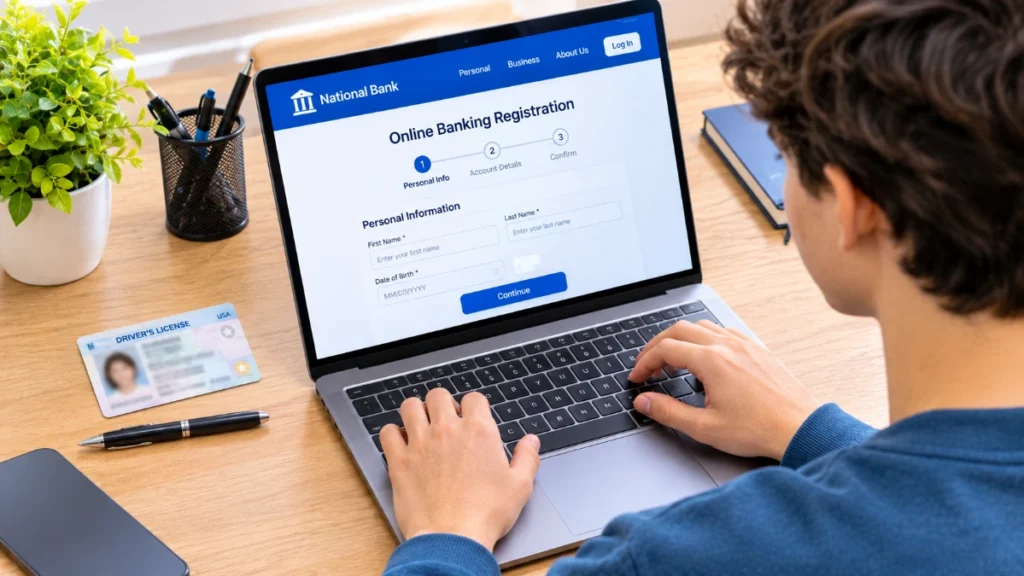
Use this route if your parent refuses or ignores you. You never need their signature.
A different bank gives you a clean break. Your statements, alerts, and logins stay completely separate from the old account.
- Pick a bank or credit union. Compare fees, minimums, and insurance coverage.
- Open an independent bank account at 18 online or in a branch. Use your own email and phone number.
- Move only money you earned or received as a gift. Keep proof of the source.
- Redirect your direct deposit. Give your employer the new routing and account numbers.
- Update payment apps, subscriptions, financial aid refunds, and tax refunds.
- Wait for pending transactions to clear. Then stop using the joint account.
Check your insurance. The FDIC insures up to $250,000 per depositor, per bank, per ownership category. Credit unions carry NCUA insurance at the same limit.
Warning: Never drain money your parent deposited. A court may order you to return it, and the bank may close your account.
Option 3: Handling Refusal or High-Conflict Situations
Some parents refuse to cooperate or react with anger. Stay calm and document everything. Your rights as an adult stay intact.
Take these steps:
- Keep records. Save statements, pay stubs, and deposit receipts that show which money is yours.
- Ask the bank about restrictions. Some banks let one owner request dual-signature rules or flag a dispute.
- Withdraw only your share. Joint owners can usually withdraw funds. Take only what you can prove you own.
- Stop adding money. Send all new income to your solo account.
- Get legal help. Legal aid clinics and family attorneys can settle ownership disputes.
Remember that joint accounts carry joint liability. If the balance goes negative, the bank can pursue both owners.
If a parent controls your money to harm or isolate you, treat it as financial abuse. Contact a trusted adult, a school counselor, or a legal aid office. You can also file a complaint with the Consumer Financial Protection Bureau.
Before You Move Any Money: A Quick Checklist
Preparation prevents most disputes. Complete these steps before you open a new account.

- Download twelve months of joint account statements.
- Highlight deposits from your job, gifts, or scholarships.
- List every automatic payment tied to the joint account.
- Review your free credit reports at AnnualCreditReport.com.
- Confirm the joint account carries no negative balance.
Banks often check ChexSystems when you apply for a new account. A past overdraft on a joint account can follow you. Clear any negative balance first.
Common Mistakes to Avoid
Small errors can turn a simple switch into a family dispute. Avoid these five.
- Draining the account in anger. Emptying shared funds can trigger legal claims. Take only your own money.
- Reusing logins. Your parent may still see old alerts. Create a new email, password, and phone number for the new account.
- Forgetting direct deposits. A missed update sends your next paycheck to the old account.
- Closing the joint account too soon. Automatic bills may bounce. Wait one full billing cycle.
- Ignoring state differences. Age of majority and UTMA ages vary. Check your state’s rules before you act.
Quick Comparison: Your Three Paths
This table shows how each path differs in signatures, speed, and control.
| Factor | Name Removal (With Signature) | Name Removal (Without Signature) | Switching to New Solo Account |
|---|---|---|---|
| Parent’s signature needed? | Yes, from both owners | Usually not possible. Banks often allow only self-removal or a court order. | No |
| Speed | Fast, often one bank visit | Slow if a court gets involved | Same day to a few days |
| Control over your money | Full control after the change | Limited until the dispute ends | Full and immediate |
| Risk of conflict | Low | High | Low to moderate |
| Best for | Cooperative parents | Serious disputes over ownership | Most 18-year-olds |
General information only. Policies vary by bank and state.
Frequently Asked Questions
Q1. Can my parents legally withdraw money from my account after I turn 18?
It depends on the account type. On a joint account, your parent can usually withdraw any amount. The bank treats both owners equally.
On a custodial account past its termination age, your parent has no withdrawal rights. On your new solo account, your parent has no access unless you add them.
Q2. Will my bank notify my parents if I open a new account elsewhere?
No. Banks do not tell your parent when you open an account at another bank. Federal privacy rules protect your personal financial information.
Your parent may still see large transfers leaving the joint account on its statements.
Q3. What documents do I need to open a solo bank account at 18?
Most banks ask for four items:
A government-issued photo ID, such as a driver’s license or passport.
Your Social Security number or ITIN.
Proof of address, such as a lease, utility bill, or school letter.
An opening deposit, if the bank requires one.
Q4. Can I freeze a joint account if my parent refuses to sign?
Usually not on your own. Most banks do not freeze a joint account at one owner’s request. You can ask the bank to require two signatures or to note a dispute.
If your parent still blocks you, a court order can freeze or divide the funds. Policies vary, so call your bank first.
Take Back Control of Your Money
You cannot remove a parent from a joint account without their signature. You can still build financial independence at 18. A solo account at a new bank gives you full control.
Move only your own money. Keep clear records. Redirect your income first, then close or leave the old account.
Ready to start? Review High School Savings Account at 18 Without Parents for the best first account. Then use the FDIC site to confirm your new bank carries deposit insurance.
Disclaimer: This article offers general education, not legal or financial advice. Consult a licensed attorney for your situation.

Ankur Saxena is a Personal Finance Researcher & Content Lead at My Finance Goal. With a focus on data-driven money management, high-yield savings strategies, and budgeting frameworks, he translates complex US economic policies and IRS updates into practical financial steps for readers.