

Most small businesses don’t fail because of bad products. They fail because of bad financial habits. SCORE says 82% of small business failures involve cash flow problems —and the fix rarely requires a finance degree. It requires business money management basics done consistently.
This guide covers the exact framework that keeps a business solvent, growing, and ready for what it can’t predict.
Why Basics Matter
Small business owners with low financial literacy lose an average of $118,121 in profits, per Intuit QuickBooks’ financial literacy data. Another 45% lost at least $10,000. Yet 60% of small business owners say they don’t have enough knowledge about finance and accounting to manage it confidently.
The gap isn’t intelligence — it’s structure. Business money management basics give you the structure. The same is true at every stage of financial life — a student money management guide teaches the same core habits that carry directly into running a business.

Separate Business and Personal Money
Every conversation about business financial management starts here. Mixing personal and business accounts is the single most common financial mistake small business owners make, and it costs real money at tax time and during audits.
Open a dedicated business checking account and a business credit card before anything else. This creates a clean paper trail, simplifies tax preparation, and gives you an accurate picture of what the business actually earns and spends — not what you think it does.
Track Cash Flow Weekly
QuickBooks says 43% of small businesses say cash flow is a consistent problem. But most of those businesses are reacting to cash flow problems rather than anticipating them.
Business money management basics require weekly cash flow tracking — not monthly, not quarterly. Weekly.
Know your numbers:
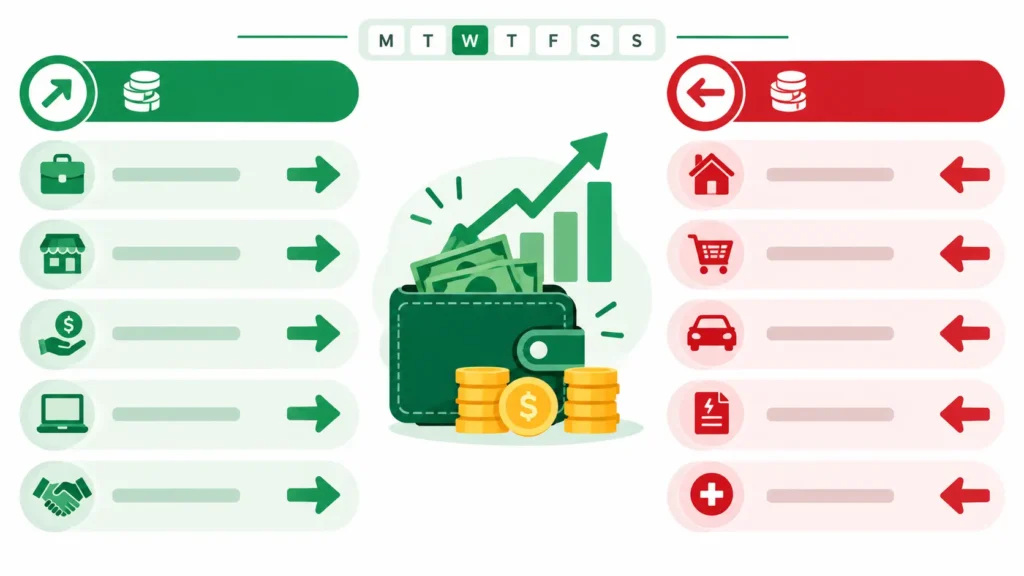
- Cash coming in: customer payments, recurring revenue, receivables due
- Cash going out: payroll, rent, subscriptions, vendor invoices
- Cash buffer: the median small business holds only 27 days of cash reserves (JPMorgan Chase Institute). Many hold far less.
A weekly review takes 20 minutes and catches gaps before they become crises.
Build a Cash Reserve
39% of small businesses have less than one month of operating expenses on hand, per Blue vine’s September 2025 survey of 774 U.S. business owners. Among businesses under two years old, 20.7% have less than seven days of reserves.
Sound business money management builds a cash cushion of 3–6 months of operating expenses in a dedicated savings account before aggressively reinvesting or expanding. This isn’t pessimism — it’s how businesses survive unexpected slow quarters, equipment failures, and economic downturns.
Start with one month. Then build toward three. Once that cushion is in place, even a modest surplus can be put to work — our guide on how to invest 1000 dollars for beginners walks through exactly where to start.
Use a Small Business Money Management App
70% of small businesses operate without an accountant, per OnPay’s 2024–2025 data. That makes software the next best option — and a strong one.
A small business money management app handles what most owners don’t want to do manually: categorizing expenses, tracking invoices, creating profit-and-loss statements, and generating tax-ready reports. The right app eliminates the guesswork from business financial management.
Top options for 2026:
| App | Best For | Starting Price |
| QuickBooks Online | Most small businesses | $35/month |
| FreshBooks | Freelancers, service businesses | $19/month |
| Wave | Sole proprietors, very small teams | Free |
| Xero | Growing teams with inventory | $20/month |

Understand Your Profit Margins
Revenue is not the same as profit. Business money management basics require understanding the difference between gross margin and net margin — and knowing yours.
Gross margin = Revenue minus cost of goods sold. If you sell a product for $100 that costs $60 to make, your gross margin is 40%.
Net margin = What’s left after every expense, including rent, payroll, software, and taxes.
A business earning $500,000 in revenue with a 5% net margin is in a more precarious position than one earning $200,000 at a 25% net margin. Knowing where you stand on both numbers is non-negotiable in business financial management.
Stay on Top of Receivables
According to QuickBooks 2025 data, 56% of businesses are owed money, with an average of $17,500 outstanding per business. Nearly half have invoices more than 30 days overdue.
Late receivables kill cash flow faster than almost anything else. Fix it with:
- Net-15 or Net-30 payment terms on every invoice (not Net-60)
- Automated invoice reminders at 7, 14, and 30 days
- A late fee policy — and enforce it
Business money management basics include getting paid on time, not just sending the invoice and hoping.
Plan for Taxes Year-Round
38% of small business owners use their own money when cash flow runs dry — and a tax bill they didn’t plan for is one of the most common triggers, per QuickBooks data.
Set aside 25–30% of every payment into a separate tax savings account if you’re self-employed or running a pass-through entity. Review estimated quarterly tax deadlines (April, June, September, January). Business money management that doesn’t account for the IRS is incomplete.
Know When to Get Help
Business financial management isn’t always a solo job. When revenue crosses $250,000, transactions get complex, or you’re preparing to raise capital or sell, a CPA’s cost pays for itself quickly.
A business financial management course is also worth considering early — before mistakes become expensive. The SBA’s free online learning center (sba.gov) covers financial basics designed specifically for small business owners, with no cost to access.
Disclaimer: This article is for educational purposes only and does not constitute financial advice. Consult a licensed financial advisor or CPA for guidance specific to your business situation.
Conclusion
Business money management basics aren’t complicated — but they require consistency. Separate your accounts, track cash weekly, build a reserve, get paid on time, and plan for taxes before they arrive. These six habits alone put a business ahead of most competitors who are guessing.
FAQ Section
Q1. What are business money management basics?
Business money management basics include separating business and personal finances, tracking cash flow weekly, building a cash reserve, managing receivables, and setting aside money for taxes. These habits form the foundation of sustainable business financial management.
Q2. What is a good small business money management app?
QuickBooks Online, FreshBooks, Wave, and Xero are the most widely used. Wave is free for very small operations. QuickBooks is the most common choice for businesses with employees or inventory. The right app depends on your transaction volume and reporting needs.
Q3. How to manage money in a small business effectively?
Track income and expenses weekly, maintain 1–3 months of cash reserves, invoice promptly with short payment terms, and review profit margins monthly. A small business money management app makes each of these much easier to maintain consistently.
Q4. What does a business financial management course teach?
Courses typically cover financial statements (income statement, balance sheet, cash flow statement), budgeting, pricing strategy, tax basics, and how to read financial reports. The SBA and SCORE both offer free versions for small business owners.
Q5. Why do small businesses struggle with financial management?
60% of owners report lacking confidence in accounting and finance knowledge, per QuickBooks data. The most common issue is reactive management—owners notice cash flow problems only after they become crises, rather than catching them early through consistent tracking.
Q6. What is a financial business salary for someone managing small business finances?
A dedicated small business finance manager or controller typically earns $65,000–$110,000 annually in the U.S., depending on business size and location, according to Bureau of Labor Statistics occupational data. Many small businesses outsource this role to a part-time bookkeeper or CPA instead.

Financial enthusiast with 5 years of experience in the US market trends and personal wealth management