
Last Updated – Nov 8, 2026
What Happens to a High School Savings Account at 18 Without Your Parents?
Quick Answer: Managing a high school savings account at 18 without parents means understanding that parents don’t automatically lose access. In a joint account, they remain co-owners with full access until both owners agree. A custodial account transfers at your state’s termination age (usually 21). For sole control, open a solo account, transfer your money, and close the old one.
Most teen savings accounts are either a minor joint checking account or savings account, or a custodial account. Which one you have decides everything, so check the account title on your latest statement first.
Banks that convert minor account to adult checking at 18 or 19 can keep your parent on the new account. Chase, for example, converts High School Checking at 19 and says your parent or guardian is still a co-owner until you both meet a banker to remove them.
Account Types at 18: Who Controls the Money?
No account type removes your parents on your 18th birthday. Only a custodial account hands control to you automatically, and only at your state’s set age.
| Account Type | Parental Access at 18 | Can Remove Parents? | Required Action |
|---|---|---|---|
| UTMA/UGMA Custodial | Custodian controls until age of termination (usually 21) | No (Early removal not allowed) | Confirm state age limit & move funds at termination |
| Joint Savings Account | Full co-owner access remains active | No (Requires parent signature) | Open new solo account & transfer balance |
| Chase High School Checking | Converts to Total Checking at 19 (Parent stays joint) | No (Both must meet in-branch) | Open new individual online bank account |
| Parent-Owned Account | 100% Legal Ownership by parent | N/A (You are not on account) | Request parent to transfer funds voluntarily |
Sources: FinAid termination ages, CFPB on joint accounts, Chase, Capital One Kids Savings.
Section 1: The Legal Shift at 18 (Age of Majority vs. Joint Account Law)
Turning 18 gives you the right to open and control your own bank account. It does not rewrite the account you already have.
Age of majority is not the age your custodial account unlocks
The age of majority is when you can sign contracts. It is 18 in most states, 19 in Alabama and Nebraska, and 21 in Mississippi, according to FinAid’s state chart.
A UTMA custodial account runs on a different clock called the age of termination. Most states set it at 21, while California, Kentucky, Maine, Maryland, Michigan, Nevada, Oklahoma, South Dakota and D.C. default to 18.
Some states let the person who opened the account choose a later age, up to 25 in places like Florida, Ohio and Washington. That choice must be made when the account is opened, so check how yours is titled.
Joint accounts have no age trigger
A joint account never converts to yours at 18. Each owner has equal rights, and the CFPB says that in most circumstances either person can withdraw money from and close a joint checking account. Your account agreement and state law can add limits.
Removing someone is harder than leaving. Many people search for removing a co-signer from a bank account, but a parent on a minor account is usually a co-owner, not a co-signer. Banks typically require that owner’s consent: Chase asks you and your parent to meet a banker, and Wells Fargo reportedly wants every joint holder at a branch or a notarized consent.
Co-ownership also carries risk. Depending on state law, a creditor with a judgment against a co-owner may be able to reach a joint account, so a parent’s debts can become your problem.
What does change on your 18th birthday
You can open an individual account with your own Social Security number (SSN) and ID, and no parent signature is involved. Banks must collect your name, date of birth, address and an identification number, which for U.S. citizens is the SSN.
Banks set their own minimum ages, and the three in Section 3 all say 18. If you live in Alabama, Nebraska or Mississippi, confirm that with the bank before applying.
Section 2: Step-by-Step Guide to Securing Your Funds (If Your Parents Won’t Sign Off)
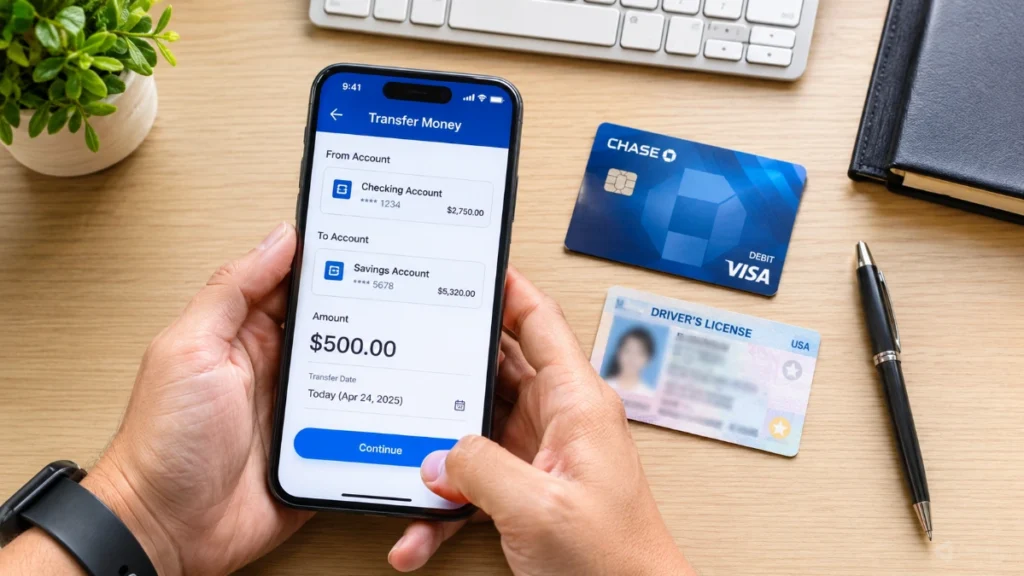
In most cases you can secure your own money without a parent’s signature by opening a new account and moving what is yours. Follow these steps in order.
- Identify the account type. Read the title on your statement. “As custodian for [your name]” means UTMA/UGMA, two names means joint, and only a parent’s name means a parent-owned account.
- Call the bank with three questions. Ask what happens to the account at 18 or 19, whether removing a parent needs that parent’s signature, and whether it will convert the minor account to adult checking and at what monthly fee. Write down the representative’s name and the date.
- If it’s custodial, check your termination age. Before that age the custodian controls the funds and you cannot force a handover. You can ask for an early transfer, or ask a legal aid office or attorney in your state about your options.
- Open your own individual account first. Do this before touching the old funds (see Section 3). Use your own email, phone number and login.
- Move your money out of a joint account. Either owner can usually withdraw, so you generally don’t need a signature. Move only what you earned or were given, and keep screenshots of deposits.
- Redirect paychecks and autopays. Update them first (see Section 5), then wait for pending transactions to clear so nothing bounces.
- Close or retitle the joint account. Ask for written confirmation. If the bank ignores its own account terms, you can file a complaint with the CFPB.
If the account is only in a parent’s name
The bank can’t release money from an account you aren’t on. The conversation is with your parent, and a clear, calm request to transfer the balance you saved is the best first move.
A caution about joint withdrawals
Moving your own savings is your right as an owner. Emptying an account that includes your parents’ deposits can trigger a family dispute and, in rare cases, a legal one. If the money is mixed, talk first or get legal advice.
Section 3: Opening Your Own Individual Account (Top Zero-Fee Options)
Capital One, Discover and Ally all let 18-year-olds open an account online with no monthly fee and no minimum balance. Checked November 8, 2026.
| Account | Minimum Age | Monthly Fee | Opening Deposit | What to Know |
|---|---|---|---|---|
| Capital One 360 Checking | 18 | $0 | No minimum; fund within 60 days | No overdraft fees. Needs SSN or ITIN, address, phone, email and employment/income details. |
| Discover Online Savings | 18 | $0 | No minimum | Needs SSN or ITIN. Capital One completed its acquisition of Discover on May 18, 2025. |
| Ally Bank Savings & Spending | 18 | $0 | $0 to open | Online-only. Requires a U.S. street address; SSN or Tax ID accepted. |
Savings rates at all three are variable, so compare current APYs on each bank’s site before choosing. Capital One also lets 18-year-olds open a 360 Performance Savings account if you want savings and checking at the same bank.
Is it FDIC insured student savings?
Yes, if the bank is FDIC-insured, which all of these are. Coverage is $250,000 per depositor, per bank, per ownership category, so your individual account is insured separately from any joint account you hold at the same bank.
Big-bank options
Chase converts High School Checking to Chase Total Checking at 19, which carries a $15 monthly fee unless you meet a waiver, such as $500 or more in qualifying electronic deposits per statement period. Chase Secure Banking has no overdraft fees and a $0 monthly fee while you are 17 to 24.
Reviews report fee waivers for students at Bank of America and Wells Fargo Clear Access Banking. Age cutoffs vary by account, so confirm the current terms with the bank.
What to have ready
- A government-issued photo ID, such as a driver’s license or passport
- Your own Social Security number (or ITIN)
- Your current address, phone number and personal email
Ally says it uses credit information to verify your identity, prevent fraud and meet federal rules, and that this won’t affect your credit score.
Section 4: Transferring Money Safely (ACH, Wire or Cash Withdrawal)
For most 18-year-olds, an ACH transfer is the right choice: it is usually free and arrives in one to three business days.
| Method | Speed | Typical Cost | Best For | Watch Out For |
|---|---|---|---|---|
| ACH Transfer (Link accounts) | 1 to 3 business days | Usually $0 to $3 | Moving all of your savings | Daily or monthly limits; linking can take a day or two. |
| Domestic Wire | Often the same business day | $15 to $35 outgoing | Urgent transfers | Wires generally can’t be recalled once sent. |
| In-Branch Withdrawal / Check | Same day | Varies by bank | A paper trail for a large amount | Bring ID, deposit promptly, avoid carrying large cash. |
Safe-transfer checklist
- Link from your new account. In the new bank’s app, add the old account as an external account, then pull the money in. Ally and Capital One both support linking.
- Test first. Send $1 to $5 and confirm it lands before moving the rest.
- Type account numbers yourself. Take them from your bank’s app, never from an email, text or caller.
- Save proof. Screenshot confirmations and download statements showing the amount you moved.
- Keep a small buffer. Leave a few dollars in the old account until every pending transaction clears.
If the money sits in a Capital One Kids Savings account, note that moving funds to a new account isn’t automatic and must be done by an account holder. As a joint holder, you are one.
A real bank will never ask you to move money to a “safe account.” Treat any such request as a scam, especially if it involves a wire.
Section 5: Switching Your Payroll Direct Deposit to Your Own Account
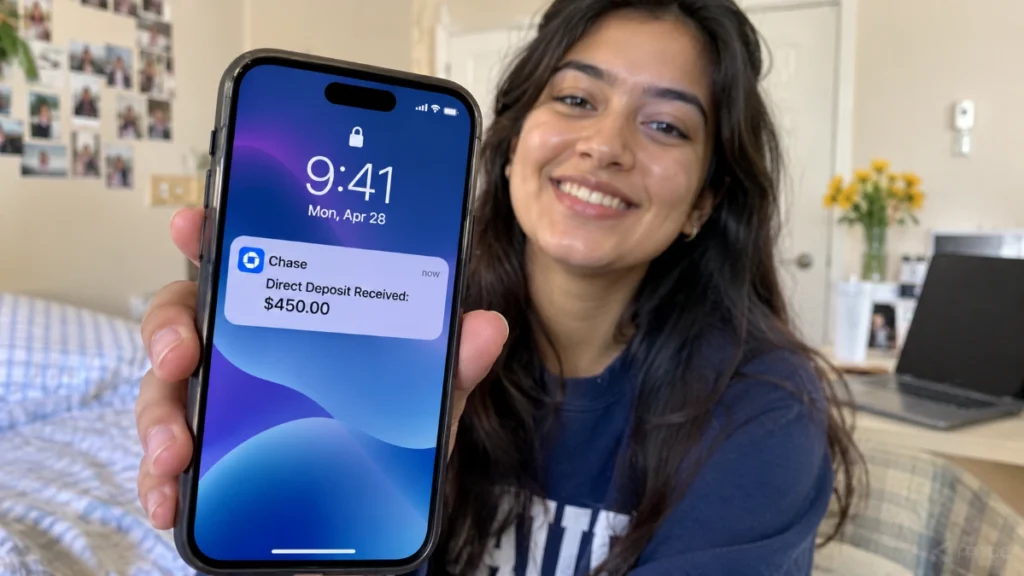
Your paycheck is your income. Pointing it at an account only you control takes three steps and, usually, one or two pay cycles.
- Get your new account details. Copy the routing number and account number from the new bank’s app. Some employers also ask for a voided check or a bank verification letter.
- Submit the change to your employer. Use the direct deposit form or the payroll portal your HR or payroll team provides. U.S. Bank’s guide lists the same core steps for any bank.
- Wait for the first paycheck to land. Changes often take one to two pay cycles, and Capital One notes that direct deposits may take two cycles to take effect. Keep the old account open until a paycheck arrives in the new one.
Keeping your new income private
Once your pay goes to an individual account, only your logins see its statements and alerts. A parent on a joint account can see all activity until they are removed or the account is closed.
- Use your own contact details. Set alerts to your personal email and phone number.
- Lock it down. Choose a unique password, turn on two-step verification, and never share your PIN or login.
- Update other payers. Move tax refunds, side-gig payouts and payment apps such as Zelle to the new account.
Banking privacy doesn’t change tax or financial aid rules. If a parent claims you as a dependent, or you apply for aid as a dependent student, those filings have their own requirements.
People Also Ask: Turning 18 and Your Bank Account
Q1. Do my parents automatically lose access to my bank account when I turn 18?
No. A joint account stays co-owned, so your parents keep full access until both owners agree to a change or the account closes. Custodial UTMA/UGMA funds pass to you only at your state’s termination age, usually 21. Teen accounts like Chase High School Checking convert at 19 with the parent still listed.
Q2. Can an 18-year-old remove a parent from a joint bank account?
Usually not alone. Banks typically need the parent’s consent, and Chase requires both owners to meet a banker. You can still open your own account and withdraw your money, because the CFPB says either joint owner can generally withdraw. Read your account agreement first.
Q3. Can I open a bank account online at 18 without my parents knowing?
Yes. Capital One, Discover and Ally accept applicants 18 and older, and none of them asks for a parent’s signature. Use your own SSN, ID, email and phone number. A parent on an existing joint account can still see its activity, so move your paycheck to the new account.
Q4. What documents do I need to open a bank account at 18 in the US?
Banks must collect your name, date of birth, address and an identification number, which is your Social Security number if you are a U.S. citizen. Expect to show a driver’s license, state ID or passport, and give a phone number and email. Some banks also ask about employment and income.
Q5. Will my high school savings account close when I turn 18?
Not usually. Capital One says a Kids Savings account stays open and joint after 18, and a MONEY Teen Checking account stays open unless you move it. Chase converts High School Checking to Total Checking at 19. Check your bank’s terms for the date and any new monthly fee.
Disclaimer: This guide is general education, not legal or financial advice. For a dispute over who owns the funds, consult a licensed attorney in your state.

Ankur Saxena is a Personal Finance Researcher & Content Lead at My Finance Goal. With a focus on data-driven money management, high-yield savings strategies, and budgeting frameworks, he translates complex US economic policies and IRS updates into practical financial steps for readers.