Last Updated: November 3, 2026
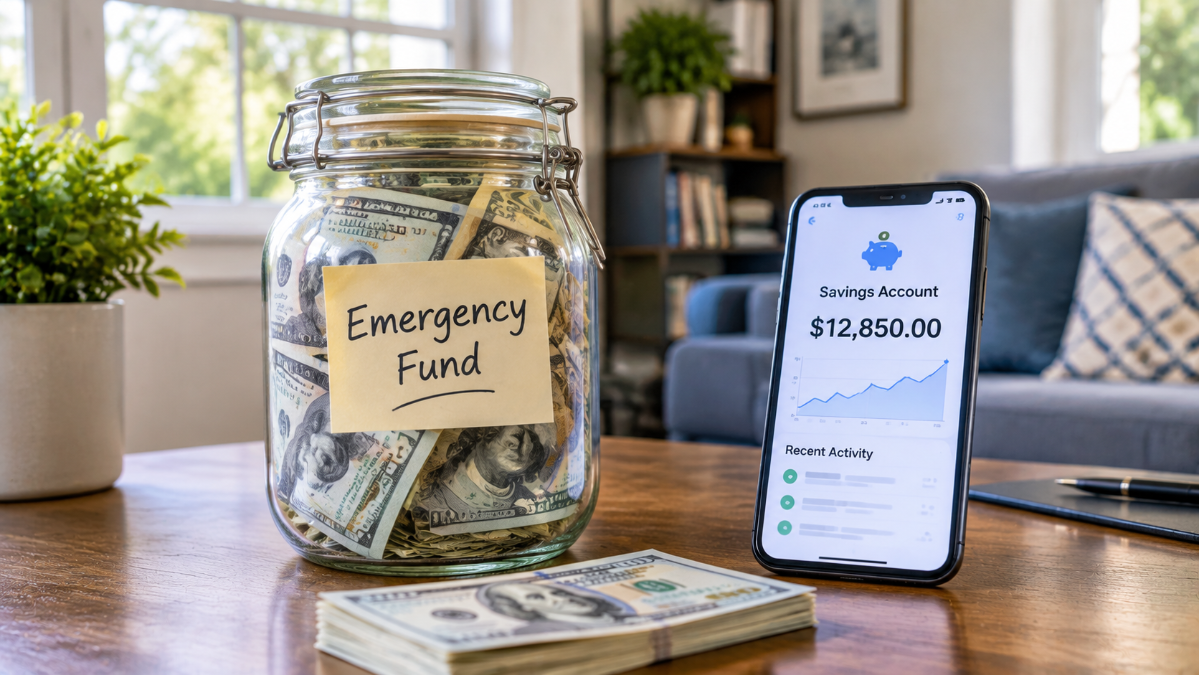
Your emergency fund should do three things: protect your savings, remain accessible when an unexpected bill arrives, and earn a competitive return while it sits untouched.
That sounds simple until you compare high-yield savings accounts.
One bank advertises a 5.00% APY but requires qualifying direct deposits. Another pays a competitive rate only on the first $5,000. A third offers a promotional boost that expires after six months. Some online banks also require you to move money through a checking account before transferring it elsewhere.
These details matter because an emergency fund is not an investment account. It is money you may need when your car breaks down, your hours get cut, or an unexpected medical bill arrives.
The best emergency fund bank is not necessarily the one with the highest advertised APY. It is the one that combines reliable deposit protection, practical withdrawal options, transparent account requirements, and a competitive ongoing rate.
This guide compares five U.S. banking options using those priorities.
Quick Answer: Which Bank Is Best for an Emergency Fund?
There is no single winner for every saver. Your balance, eligibility for promotional rates, and need for immediate access can change which account makes the most sense.
Here is how the accounts compare based on their published features and rate disclosures checked on November 2, 2026.
| Bank | Published Savings APY | Best For | Important Limitation |
|---|---|---|---|
| Varo Bank | 3.75% on first $5,000; 1.00% above that | Savers who meet its direct deposit requirements | External transfers take 1–5 business days and require moving money through Varo checking |
| Axos Bank (ONE Savings) | 4.21% qualified rate; limited promotional offer up to 5.00% | Savers who can meet the checking account requirements | Higher rates require qualifying deposits and minimum average daily balances |
| SoFi Bank | 3.30% base; up to 4.40% with eligible 1.10% boost | Customers who qualify for its promotional rate | Boost is limited to eligible customers and expires after up to six months |
| Marcus by Goldman Sachs | 3.50% | Savers who prefer straightforward account terms | No checking account, debit card, or ATM access |
| Newtek Bank | 4.20% | Existing customers seeking a competitive savings rate | New personal savings applications are currently paused |
Important: APYs are variable and can change. Promotional rates, balance tiers, and qualification requirements are not interchangeable. Check the official rate disclosure before opening an account.
1. What Makes a Bank Suitable for an Emergency Fund?
An emergency fund has a different job from money invested for retirement or long-term wealth building.
You are not trying to maximize returns at any cost. You are trying to keep money available for an expense that cannot wait.
A useful way to evaluate an account is to consider three factors.
Deposit Safety Comes First
Your savings should be held at an institution with appropriate federal deposit insurance.
For banks, look for FDIC insurance. For federally insured credit unions, look for NCUA share insurance.
Standard FDIC coverage is generally $250,000 per depositor, per insured bank, per ownership category.
That limit applies to the combined deposits you own in the same ownership category at the same bank. Opening several savings accounts at one bank does not automatically increase your coverage.
For example, a person with $200,000 in a single-owner savings account and another $100,000 in a single-owner checking account at the same insured bank generally has $300,000 in that ownership category. Only $250,000 is insured.
Joint accounts follow separate ownership rules. Two qualifying co-owners may receive up to $500,000 in combined coverage on qualifying joint deposits, provided all requirements are met.
You can verify a bank through the FDIC BankFind Suite.
For more complicated balances, use the FDIC’s Electronic Deposit Insurance Estimator (EDIE).
Access Speed Matters More Than a Small Rate Difference
Imagine you need $1,500 for an urgent car repair on Friday evening.
Your savings account may offer a competitive APY, but that does not mean the money will reach your checking account immediately.
A standard ACH transfer may take one or more banking days. The exact processing time depends on the sending institution, receiving institution, transfer type, cutoff time, and any security review.
This is why you should examine the entire withdrawal process, not just the bank’s advertised transfer speed.
Ask these questions before opening an account:
- Can I transfer money between savings and checking instantly?
- Can I send money to an external bank?
- Does the bank support outgoing wires?
- Are there transfer limits?
- Can I access cash through an ATM or debit card?
- What happens when I request a transfer on Friday evening?
A Competitive APY Helps, but It Is Not the First Priority
A high APY can help your emergency fund grow without taking market risk.
However, a promotional rate may not last, and a tiered rate may apply to only part of your balance.
For example, consider two accounts:
- Account A pays 4.20% on the full qualifying balance.
- Account B pays 5.00% on the first $5,000 and 1.00% on the remaining balance.
For a $15,000 balance, Account B would earn approximately:
- First $5,000 at 3.75%: approximately $187.50 in annual interest.
- Remaining $10,000 at 1.00%: approximately $100 in annual interest.
- Total: approximately $287.50 per year.
That works out to an approximate blended rate of 1.92%.
The lesson is simple: calculate the rate on your actual balance rather than choosing an account based on its headline APY.
2. FDIC vs. NCUA: How to Protect Your Emergency Savings
Federal deposit insurance is one of the most important parts of choosing an emergency savings account.

FDIC-Insured Banks
The Federal Deposit Insurance Corporation protects eligible deposits at insured banks.
The standard coverage limit is:
$250,000 per depositor, per insured bank, per ownership category.
Covered deposit products generally include:
- Checking accounts
- Savings accounts
- Money market deposit accounts
- Certificates of deposit
FDIC insurance does not cover stocks, bonds, mutual funds, annuities, or cryptocurrency.
If an insured bank fails, the FDIC generally arranges for insured deposits to be transferred to another institution or pays depositors directly.
The FDIC’s goal is to provide access to insured deposits within two business days, although some accounts requiring additional documentation can take longer.
Insurance protection and immediate access are therefore two different things.
You can read the FDIC’s official deposit insurance explanation.
NCUA-Insured Credit Unions
Credit unions use a different federal insurance system.
The National Credit Union Administration administers the National Credit Union Share Insurance Fund.
For qualifying accounts, the standard limit is also $250,000 per member-owner, per insured credit union, per ownership category.
Qualifying joint accounts can receive separate coverage based on each owner’s eligible interest and the applicable requirements.
Before depositing money, verify that the credit union is federally insured.
Use the NCUA Share Insurance Coverage resource.
What About Fintech Apps and Neobanks?
A financial app is not automatically a bank.
Some financial technology companies offer deposit accounts through partner banks. In those arrangements, the partner bank may hold the deposits while the app provides the customer interface.
This is where pass-through deposit insurance becomes important.
Pass-through coverage may apply when the legal and recordkeeping requirements are satisfied, including adequate records showing the actual owners of the funds.
Do not assume that an app’s statement about FDIC insurance means every balance is automatically covered under every circumstance.
Before depositing a substantial emergency fund, find out:
- Which bank actually holds your deposits?
- Is that bank FDIC-insured?
- Are your funds held directly or through a partner-bank arrangement?
- Are ownership records properly maintained?
- Could your deposits at other accounts reduce your available insurance coverage?
For broker-dealer cash sweep programs, also check which partner banks receive your money and how much you already hold at those institutions.
3. Best Banks for Emergency Funds: Detailed Comparison
The following comparison focuses on published APYs, account requirements, and practical access considerations.
1. Varo Bank: A Tiered Savings Option for Qualifying Customers
Varo Bank offers a savings account with no monthly maintenance fee and no minimum balance requirement.
Its published savings structure offers:
- 1.00% APY as the standard rate.
- 3.75% APY on the first $5,000 for qualifying customers.
- 1.00% APY on balances above $5,000.
To qualify for the higher rate, customers must:
- Receive at least $800 in qualifying direct deposits during the month.
- Maintain positive balances in their Varo accounts at month-end.
The higher APY is not automatic. Customers who do not satisfy the conditions earn the standard rate.
Access considerations
Varo allows customers to transfer money between their Varo savings and bank accounts instantly through its app.
However, its external bank transfer process is different.
Customers cannot send money directly from Varo Savings to an outside bank. They must first move the money to their Varo Bank Account.
Varo states that external bank transfers generally take 1–5 business days.
That limitation is important if your emergency fund needs to reach a checking account at another institution.
Who should consider Varo?
Varo may suit customers who receive qualifying direct deposits, maintain relatively modest savings balances, and are comfortable using Varo checking as an intermediate account.
It is less attractive for someone keeping a large emergency fund because the higher APY applies only to the first $5,000.
Official sources:
2. Axos Bank ONE Savings: Competitive Rates With Qualification Requirements
Axos ONE combines checking and savings features within one banking relationship.
Its published savings rate structure includes:
- 4.21% APY on qualifying balances up to $249,999.99.
- 3.50% APY on qualifying balances of $250,000 and above.
- 1.00% APY on balances when the qualification requirements are not met.
Axos also advertises a limited-time promotional boost for eligible new customers.
The promotional offer can bring the APY to 5.00% on the first $49,999.99 for qualifying customers during the first six statement cycles.
To qualify for the boosted rate, customers must meet one of the following checking-account requirements:
Option 1
- Receive at least $1,500 in qualifying monthly direct deposits.
- Maintain an average daily checking balance of at least $1,500.
Option 2
- Receive at least $5,000 in qualifying monthly deposits.
- Maintain an average daily checking balance of at least $5,000.
The qualification requirements must be satisfied within the bank’s stated qualification period.
Access considerations
Axos offers a combined checking and savings arrangement, which can make transfers between the accounts convenient.
However, customers should confirm external transfer processing times, transfer limits, and any applicable security holds directly with Axos.
Do not treat the advertised promotional APY as the permanent rate.
Who should consider Axos ONE?
Axos may be worth considering for customers who can comfortably meet the checking-account requirements and want a competitive ongoing savings rate.
Customers who cannot meet those requirements should compare the 1.00% standard rate with other available accounts.
Official sources:
3. SoFi Bank: A Promotional Boost for Eligible Customers
SoFi offers checking and savings accounts through its online banking platform.
As of the October 20, 2026 rate disclosure, its published savings structure includes:
- 3.30% base APY.
- An additional 1.10% APY boost for eligible new customers.
- Up to 4.40% APY during the promotional period.
The promotional boost can last up to six months.
Eligibility is subject to SoFi’s promotion terms and qualifying account activity. Customers should review the direct deposit or qualifying deposit requirements before relying on the higher APY.
The promotional rate should not be confused with the standard savings rate.
Access considerations
Having checking and savings accounts at the same institution can make internal transfers convenient.
SoFi also provides information about instant transfers for eligible linked accounts. However, an instant transfer should never be assumed to work with every external bank.
Check whether both institutions support the applicable instant payment service and confirm the limits and eligibility inside your account.
Standard ACH transfers may take longer.
Who should consider SoFi?
SoFi may be suitable for customers who want checking and savings together and can qualify for its promotional APY.
Customers who do not qualify should compare the base rate with other available savings accounts.
Official sources:
4. Marcus by Goldman Sachs: A Straightforward Savings Account
Marcus by Goldman Sachs offers an online savings account with no monthly maintenance fee and no minimum deposit requirement.
Its published savings APY was 3.50% as of November 2, 2026.
The account also offers a referral promotion under which eligible customers may receive an additional APY boost for a limited period, subject to the promotion’s terms.
Access considerations
Marcus does not provide a checking account, debit card, or ATM access through its online savings account.
However, it offers same-day transfers of $100,000 or less to and from other banks, subject to applicable processing requirements and account eligibility.
The published account information identifies same-day transfer availability, but customers should confirm the applicable cutoff times and whether their particular transfer qualifies.
This distinction matters: same-day processing is not the same as immediate access to cash at an ATM.
Who should consider Marcus?
Marcus may suit savers who prefer a simple savings account with no minimum deposit and do not need an attached checking account or debit card.
It may be less suitable as the only location for emergency money if you need physical cash outside banking hours.
Official sources:
5. Newtek Bank: A Competitive Rate, but New Applications Are Paused
Newtek Bank’s Personal High Yield Savings account published a 4.20% APY as of November 2, 2026.
The account requires a $100 minimum opening deposit according to its published rate disclosure.
However, there is an important availability limitation.
Newtek has paused new applications for its Personal High Yield Savings account because of demand. New customers are directed to a waitlist.
This means the account should not be treated as an immediately available option for someone building an emergency fund today.
Existing customers should continue to check their own account terms and current rate disclosures.
Who should consider Newtek?
Existing customers may find the published rate competitive.
New customers should not build an emergency-fund plan around an account they cannot currently open.
Official sources:
4. ACH vs. Same Day ACH vs. Wire vs. FedNow
A savings account’s APY does not tell you how quickly your money will move.
You also need to understand the payment system used to transfer funds.
Standard ACH Transfers
ACH is an electronic payment network used for many bank-to-bank transfers, payroll deposits, and bill payments.
Standard ACH transactions generally settle on banking days.
The exact time depends on the bank’s processing schedule, the transfer type, cutoff times, and any security reviews.
Transfers requested near a cutoff, on a weekend, or before a federal banking holiday may take longer.
Same Day ACH
Same Day ACH allows eligible transactions to be processed and settled on the same banking day.
However, not every bank makes every eligible transaction available to customers as a same-day transfer.
A bank may also impose its own earlier submission deadlines, transaction limits, or eligibility restrictions.
Therefore, do not assume that a bank supporting Same Day ACH guarantees same-day withdrawals for every customer.
Wire Transfers
Domestic wire transfers can often arrive on the same business day when submitted before the bank’s cutoff.
However, processing depends on the sending and receiving institutions.
Wires may involve fees and additional verification.
They can be useful for larger or time-sensitive payments, but they are not always the most convenient way to access a small emergency expense.
FedNow
FedNow is the Federal Reserve’s instant payment service.
It processes eligible payments within seconds, 24 hours a day, seven days a week, including weekends and holidays.
However, both participating institutions must support the applicable payment service and transaction.
A bank having access to instant payment infrastructure does not mean every customer, account, or transfer is automatically eligible.
Check the Federal Reserve’s FedNow participant information.
Payment Method Comparison
| Payment Method | Typical Processing | Availability | Important Limitation |
|---|---|---|---|
| Standard ACH | Often 1–3 business days, depending on the bank | Banking days | Cutoffs and holds can delay transfers |
| Same Day ACH | Same banking day when eligible | Banking days | Bank participation and limits apply |
| Domestic Wire | Often same business day if submitted before cutoff | Banking days | Fees and verification may apply |
| FedNow | Seconds for eligible transactions | 24/7/365 | Both institutions and transactions must qualify |
The most important question is not whether a payment network exists. It is whether your bank lets you use it for the transfer you actually need.
For official information, see Nacha’s ACH Payments Fact Sheet.
5. Why Weekend and Holiday Access Can Become a Problem
An emergency does not follow a banking calendar.
Your car may break down on Sunday. Your refrigerator may stop working on Thanksgiving. Your landlord may need a payment before a holiday weekend.
Traditional ACH settlement does not operate on weekends and federal holidays.
For example, a transfer requested after a bank’s cutoff on Thursday, November 26, 2026, may not begin normal ACH settlement until the next banking day.
That does not mean every transfer will take the same amount of time. The result depends on the payment method and the banks involved.
The practical lesson is to avoid keeping your entire emergency fund in an account that requires an external transfer for every withdrawal.
You need at least one way to pay an urgent expense without waiting for a standard bank transfer.
6. The Two-Tier Emergency Fund Strategy
One practical solution is to divide your emergency fund into two layers.
If you are still building your savings, start with our practical guide on How to Build an Emergency Fund Fast. It explains how to set savings milestones and build your financial safety net step by step.

Tier 1: Immediate Access
Keep enough money in a checking account or another suitable transaction account to cover urgent expenses.
This account should provide convenient access through a debit card, eligible instant payments, or an ATM.
A reasonable starting point is one month of essential expenses, although the appropriate amount depends on your situation.
Tier 2: High-Yield Savings
Keep the remaining emergency savings in an FDIC-insured or NCUA-insured savings account.
This account should offer a competitive APY and a withdrawal process you understand.
You can use it for larger emergencies or when your immediate-access balance needs replenishing.
Example: A $9,000 Emergency Fund
Suppose your total emergency savings are $9,000.
You might structure them as follows:
| Account | Amount | Purpose |
|---|---|---|
| Checking Account | $3,000 | Immediate expenses |
| High-Yield Savings | $6,000 | Larger or less urgent emergencies |
| Total | $9,000 | Complete emergency fund |
This is an illustration, not a universal recommendation.
Your essential expenses, job stability, dependents, insurance coverage, and access to other reliable funds should determine the appropriate split.
Does Keeping Money in Checking Cost Too Much Interest?
It can cost some interest, but the difference may be smaller than you expect.
For example, assume $3,000 earns 3.30% APY in one account instead of 4.20% APY in another.
The approximate annual interest difference is:
$3,000 × (4.20% − 3.30%) = $27.
That is about $27 per year before taxes, assuming the rates remain unchanged.
The extra access and convenience may be worth that difference.
The goal is not to maximize every dollar of interest. It is to make sure your emergency money is available when you need it.
7. How to Choose the Right Emergency Fund Bank for Your Situation
Different accounts serve different needs.
Before opening an account, match the account’s features to your actual requirements.
If You Want a Higher Ongoing APY
Compare the ongoing qualified APY rather than a temporary promotional rate.
Check how long the rate lasts, whether it has balance tiers, and what happens when you fail to meet qualification requirements.
If You Want Fewer Account Requirements
Look for accounts with no monthly fees, no minimum deposit, and no recurring direct deposit requirements.
A slightly lower APY can be more practical if you do not need to monitor multiple qualification rules.
If You Need Access Through a Debit Card
Consider keeping part of your emergency fund in a checking account with a debit card.
Do not assume every high-yield savings account provides debit card or ATM access.
If You Keep More Than $250,000
Review your deposit insurance exposure before placing the money in one institution.
Remember that insurance is calculated using ownership categories and total deposits at the same insured bank.
Opening multiple accounts at the same bank does not automatically create additional coverage.
If necessary, consider spreading eligible deposits across separately insured institutions or consult the FDIC’s EDIE estimator.
If You Use a Fintech Savings App
Identify the actual bank holding the deposits.
Read the account agreement and understand how pass-through insurance works.
Also consider whether the app’s customer service, recordkeeping, and withdrawal process are suitable for money you may need during an emergency.
8. How We Evaluated These Emergency Fund Banks
We evaluated the accounts using information that matters to someone holding emergency savings.
Our comparison considers five areas:
1. Deposit Protection
We considered whether the institution provides direct FDIC-insured bank deposits or another clearly identified federal deposit-insurance structure.
2. Published APY
We distinguished between standard rates, qualified rates, balance tiers, and temporary promotional offers.
3. Account Requirements
We considered minimum deposits, direct deposit conditions, average daily balance requirements, monthly fees, and account eligibility.
4. Access to Money
We reviewed the published transfer features and identified important limitations involving checking accounts, external transfers, debit cards, and same-day processing.
5. Account Availability
We considered whether new customers can currently apply for the account.
Our comparison uses publicly available bank information and official disclosures. We did not independently conduct test withdrawals or verify every bank’s processing time through customer accounts.
Rates and account terms can change. The APYs in this article were checked against available official disclosures on November 2, 2026.
9. Frequently Asked Questions
-
Q1. What is the safest place to keep an emergency fund?
A savings or checking deposit account at an FDIC-insured bank or federally insured credit union is generally a suitable place for emergency savings.
Stay within applicable insurance limits and verify the institution’s insurance status. -
Q2. Is a high-yield savings account good for an emergency fund?
Yes. A high-yield savings account can combine deposit protection, interest earnings, and relatively convenient access.
However, check transfer restrictions and make sure you have another way to cover immediate expenses. -
Q3. Should I keep my entire emergency fund in one bank?
You can, provided the account meets your needs and your deposits remain within applicable insurance limits.
Some people prefer keeping part of their emergency fund in a separate checking account to avoid delays when transferring money. -
Q4. Is FDIC insurance the same as having immediate access to money?
No.
FDIC insurance protects eligible deposits if an insured bank fails, up to applicable limits.
It does not guarantee that you can withdraw money instantly at any time. -
Q5. Can I have more than $250,000 in FDIC insurance at one bank?
Yes, in certain circumstances.
Different qualifying ownership categories may receive separate insurance coverage. Certain joint and trust account structures can also qualify for additional coverage when all requirements are met.
Simply opening multiple savings accounts in the same ownership category does not increase the standard coverage limit.
The Bottom Line: Protect Your Cash Before Chasing Yield
An emergency fund is not designed to make you rich. It is designed to prevent an unexpected expense from becoming a financial crisis.
That is why safety and accessibility should come before the advertised APY.
Start by verifying FDIC or NCUA coverage. Next, understand how quickly you can move money into your checking account or access cash. Finally, compare the ongoing APYs and account requirements.
A bank paying 0.10 percentage points more may not be worth choosing if its withdrawal process creates unnecessary delays.
Consider using a two-tier setup: keep immediate expenses in a convenient transaction account and place the remaining savings in a competitive insured savings account.
The best emergency fund account is the one that protects your money, gives you practical access when life becomes unpredictable, and earns a reasonable return without unnecessary complications.
Editorial Disclosure: This article is for educational and informational purposes only. It does not constitute personalized financial, tax, or investment advice. APYs, account requirements, transfer limits, fees, and promotional offers can change without notice. Always confirm current terms directly with the financial institution before opening an account or transferring money.

Financial enthusiast with 5 years of experience in the US market trends and personal wealth management