
Premiums doubled for millions of people this year. That single fact changed how families search for coverage. If you’ve typed “government assistance health insurance” into Google at 11 p.m. while staring at a renewal notice, you’re not alone, and you’re not out of options.
The enhanced Affordable Care Act subsidies expired on December 31, 2025. Congress didn’t extend them. The result: average out-of-pocket premiums for subsidized marketplace enrollees rose about 114% this year, and roughly 20 million people felt it in their first 2026 bill.
But “the subsidies changed” doesn’t mean “the help disappeared.” It means the map of government assistance health insurance looks different than it did last year, and knowing where the remaining paths lead matters more than ever.
This guide walks through what’s still on the table: Medicaid, CHIP, the leaner ACA marketplace credits, and the state-level programs that popped up to fill the gap.
What counts as government assistance health insurance today
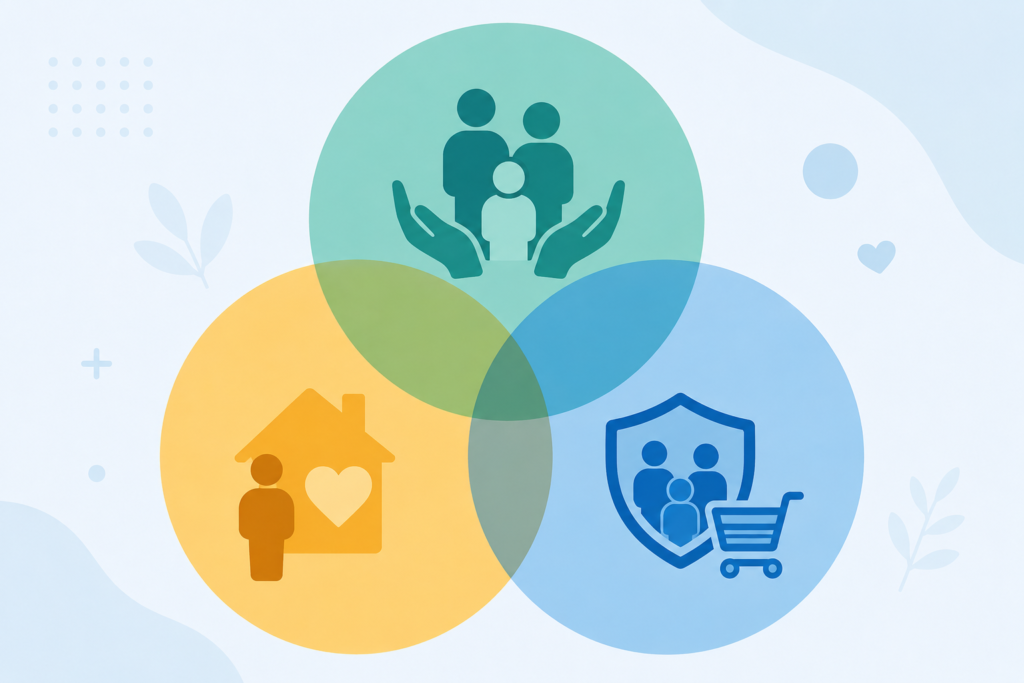
Three federal programs form the backbone. Medicaid covers low-income adults, children, pregnant women, and people with disabilities. CHIP covers kids in families that earn too much for Medicaid but not enough to comfortably afford private coverage. The ACA marketplace offers subsidized private plans through HealthCare.gov or a state exchange.
A fourth layer exists now too: state-funded subsidies. At least ten states built their own premium support programs after the federal enhanced credits lapsed. New Mexico went furthest, replacing the expired federal subsidy entirely for its residents. Maryland and New Jersey run similar, smaller efforts. None of this is government assistance health insurance in the traditional Medicaid sense — it’s states patching a hole the federal government left open. Coverage costs shift by state for more than health plans, too; motorcycle insurance rates swing just as widely from one zip code to the next..
Medicaid: the largest program, still free to enroll
Medicaid remains the biggest source of government assistance health insurance in the country, covering over 70 million people. Eligibility depends on income, household size, and whether your state expanded Medicaid under the ACA. In expansion states, adults earning up to 138% of the federal poverty level generally qualify. In the ten states that never expanded, the rules are stricter and often exclude childless adults entirely.
Medicaid has no premiums for most enrollees and minimal copays. That’s the part people forget when they’re deep in ACA marketplace research: if your income is low enough, you may not need a subsidized private plan at all. You may qualify for coverage that costs nothing.
Applications go through your state Medicaid agency or through HealthCare.gov, which screens for Medicaid eligibility automatically when you apply for marketplace coverage. There’s no open enrollment window. You can apply for Medicaid any month of the year.

CHIP: coverage for kids just above the Medicaid line
CHIP sits right above Medicaid’s income line. Every state runs a CHIP program, and the income thresholds vary widely — some states cover kids in families earning up to 400% of the federal poverty level. Premiums, when they exist, are capped and modest. Pregnant women qualify for CHIP coverage in many states too.
If you’ve been told your income disqualifies your family from Medicaid, don’t assume that closes the door. CHIP was built specifically for that gap, and it’s one of the more reliable forms of government assistance health insurance available to working families right now.
The ACA marketplace in 2026:
Here’s the part that catches people off guard. The premium tax credit itself didn’t go away — only the enhanced version did. The base subsidy structure from the original 2010 law is still in effect. What changed is the size of the credit and who qualifies.
Before 2026, anyone whose benchmark plan cost more than 8.5% of income could get help, regardless of how much they earned. That income cap is back now. Anyone earning above 400% of the federal poverty level — about $63,000 for a single person — gets no subsidy at all. KFF calls this the “subsidy cliff,” and it’s returned with real teeth: someone earning $64,000 can pay the same premium as someone earning $150,000.
For households under that line, subsidies still reduce premiums. They’re just smaller than they were in 2025. Open enrollment for 2026 coverage ran November through mid-January, but a Special Enrollment Period may still apply if you had a qualifying life event — a job loss, a move, a new baby, a divorce.
Middle-income families and people in their late 50s and early 60s have absorbed the biggest hit. Without an employer plan and without Medicare eligibility yet, the marketplace was often their only realistic option, and it just got more expensive.
Who actually qualifies for GA health insurance right now
Eligibility isn’t one rule — it’s a layered system, and where you land depends on income, state, age, and household composition.
- Under about 138% FPL, in an expansion state: likely Medicaid, no premium.
- Slightly above that, or in a non-expansion state: check CHIP for kids, marketplace subsidies for adults.
- Between 138% and 400% FPL: ACA marketplace credits still apply, reduced from 2025 levels.
- Above 400% FPL: no federal subsidy under current law. Check whether your state runs its own program.
- Pregnant, under 65, or living with a disability: additional pathways may apply regardless of income, including Medicaid disability categories and CHIP prenatal coverage.
None of these categories are permanent. Income changes, job changes, and family changes all trigger reassessment, so it’s worth checking your status even if you were denied a year or two ago.
How to apply for government assistance health insurance
Start at HealthCare.gov, or your state’s own exchange if you live in one of the 19 states that run one (California’s Covered California and New York’s NY State of Health are two examples). The application screens you for Medicaid, CHIP, and marketplace subsidies in a single pass — you don’t need to know in advance which program you’ll land in.
You’ll need income documentation, household size, and Social Security numbers for everyone applying. If your income fluctuates — freelance work, seasonal jobs, tips — estimate conservatively and update the application when your numbers firm up. Getting this wrong can mean repaying subsidies at tax time.
Outside open enrollment, Medicaid and CHIP stay open year-round. Marketplace plans require a Special Enrollment Period unless you’re applying for Medicaid or CHIP through the same portal.
Common mistakes people make when applying
People assume one bad outcome closes every door. It doesn’t. A Medicaid denial doesn’t rule out CHIP for your kids. A marketplace subsidy that shrank doesn’t mean it disappeared. And a state you assume has nothing extra might actually run a temporary premium support program nobody told you about.
The other mistake: waiting. Special Enrollment Periods have tight windows, usually 60 days from the qualifying event. Miss it, and you’re stuck until the next open enrollment.

Financial enthusiast with 5 years of experience in the US market trends and personal wealth management