
It’s one of the most Googled personal finance questions. How many credit cards should I have? The answer isn’t a fixed number. It depends on your income, your spending habits, and how well you manage debt.
But if you want a starting point: 2 to 3 cards is where most financially healthy people land.
Here’s why.
What the data actually says
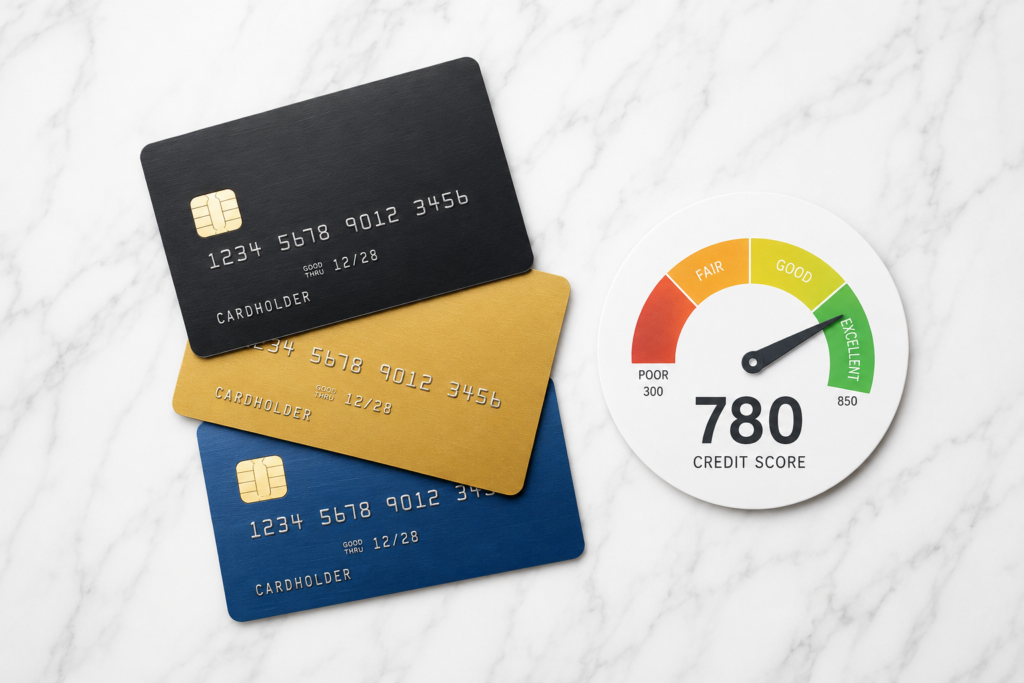
Your credit score is shaped by your credit utilization ratio — how much of your available credit you’re using at any time. Keeping that below 30% is the general rule. Below 10% is even better.
More cards = more available credit = lower utilization (assuming you’re not spending more just because you have the room). So from a pure credit score angle, having multiple cards can help.
But that’s only true if you’re paying them off. Carrying balances across 4 cards at 24% APR is the fastest way to make a small problem much larger.
How many credit cards should one have?
If you’re just starting out: 1 card. Get a secured card, use it for small purchases, pay it off every month. Learning the habit matters more than maximizing rewards right now.
If you have solid credit and pay in full: 2 to 3 cards makes sense. One for everyday spending, one for travel or a rewards category, maybe a store card if you actually shop there regularly.
If you’re optimizing rewards: some people run 4 to 6 cards strategically. Rotating category cards, travel cards with lounge access, cash-back cards for groceries. It can work. It requires actual tracking.
If you struggle with overspending: fewer is better. How many credit cards should I have if I tend to overspend? Probably 1. The rewards don’t matter if you’re carrying a balance.
What happens when you apply for too many
Every time you apply for a new card, the issuer runs a hard inquiry on your credit report. One inquiry drops your score by maybe 5 points. Not a disaster. But 3 inquiries in 6 months looks like you’re scrambling for credit, and lenders notice.
There’s also the issue of credit age. How many credit cards should I have if I want to protect my average account age? Opening new accounts lowers that average, which dings your score temporarily. 5 new cards in a year can hurt, even if you manage them all perfectly.

How to get a credit card (the right way)
How to get a credit card isn’t complicated, but the order matters.
Check your credit score first. Most banks show you this for free.
Match the card to your score. A 620 score won’t get you a premium travel card. Start where you qualify.
Compare annual fees vs. rewards. A $95 annual fee card needs to return more than $95 in real value.
Apply for one card at a time. Space applications at least 6 months apart.
Set up autopay immediately. The single best habit you can build.
How to get a credit card with no credit history: start with a secured card, where you deposit money as collateral, or become an authorized user on a family member’s account.
The real answer
How many credit cards should I have? For most people, 2 to 3 is the sweet spot. Enough to optimize rewards and keep utilization low. Not so many that you’re losing track of due dates and fees.
The number matters less than the behavior. Someone with 1 card they pay off monthly is in better shape than someone juggling 6 cards with 4 open balances.
Figure out what you’re trying to accomplish — building credit, earning rewards, or just managing everyday spending — and let that drive the number.
Checkout Official Sites
- Consumer Financial Protection Bureau: Understanding credit cards
- Experian: What is a good credit utilization rate?
Frequently Ask Questions (FAQs)
Q1. How many credit cards should one have?
Most people do best with 2 to 3. One for everyday spending and one for a specific rewards category covers the majority of situations. If you’re just starting out, 1 is enough.
Q2. How many credit card services are there?
In the US, the 4 major credit card networks are Visa, Mastercard, American Express, and Discover. Individual card products number in the hundreds across these networks, issued by banks like Chase, Citi, Capital One, and Bank of America.
Q3. How many types of credit cards are there?
There are 6 main types: rewards cards, cash-back cards, travel cards, secured cards (for building credit), student cards, and balance transfer cards. Some overlap categories.
Q4. How many digits are in a credit card?
Most credit cards have 16 digits. American Express cards have 15. The first digits identify the network and issuer; the last digit is a checksum that validates the card number.

Financial enthusiast with 5 years of experience in the US market trends and personal wealth management